ASUS Expands Local AI From DIY PCs to Enterprise Systems
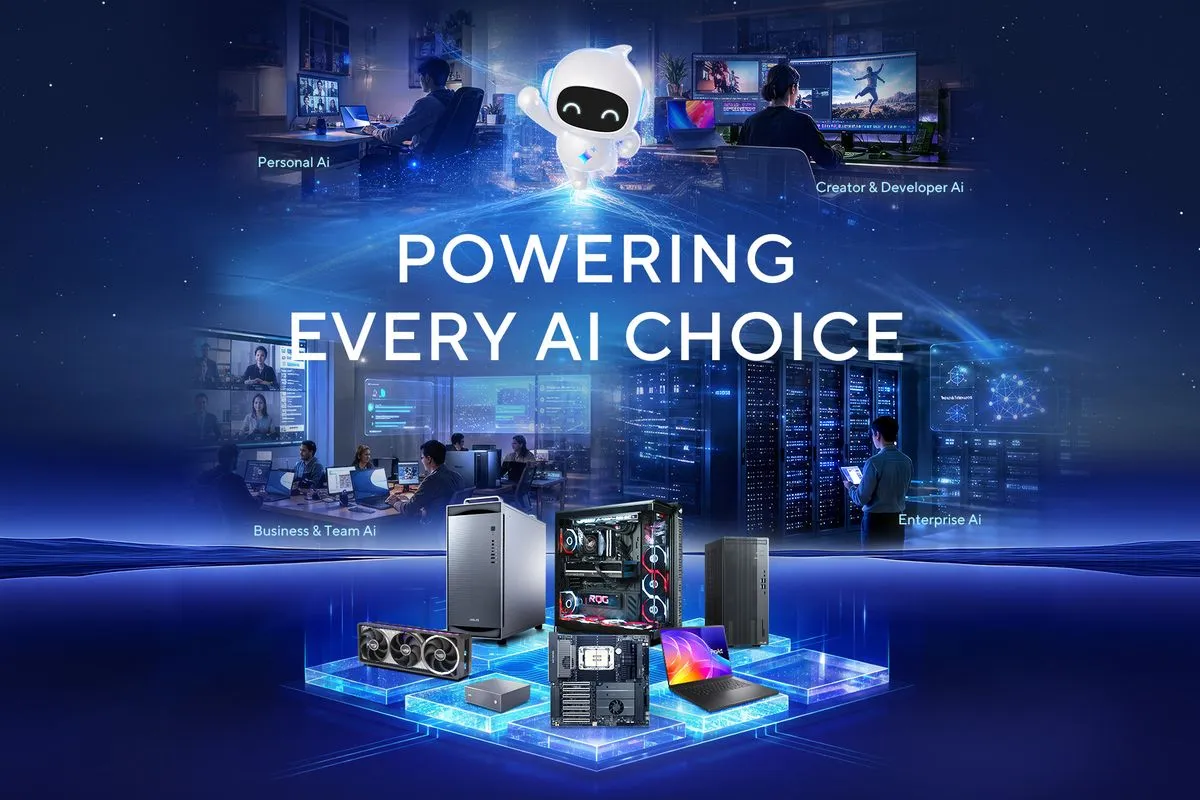
ASUS is expanding its Agent Computer initiative across DIY PCs, gaming systems, creator workstations and professional desktops, giving users options to run AI locally, in the cloud or through hybrid models. The company says the portfolio is designed to improve control over performance, data privacy and operating costs.
- ASUS is expanding its Agent Computer initiative across consumer and enterprise hardware.
- The initiative supports local, cloud and hybrid AI deployments.
- The portfolio includes motherboards, GPUs, PCs, workstations and enterprise supercomputers.
- ASUS Zenni Claw and Multi-LM Tuner are part of the software ecosystem.
- ASUS is emphasizing total cost of ownership and total cost of operations.
A broader hardware portfolio for local AI
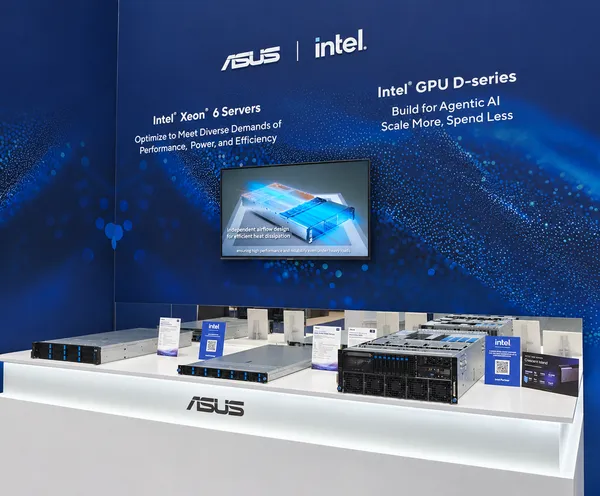
The ASUS Agent Computer initiative covers a wide range of AI-capable platforms, from DIY PC builds to laptops, mini-PCs, desktop PCs, workstations and enterprise supercomputers. ASUS says users can build systems with its motherboards and graphics hardware, including NVIDIA GeForce RTX, AMD Radeon™ AI GPUs and Intel® Arc™ Pro AI Accelerators.
The hardware portfolio includes AI-ready motherboards from the PRIME, TUF Gaming, Republic of Gamers (ROG) and ProArt series. It also includes the ExpertCenter Pro ET900A X9 workstation and the ProArt GR1X Mini PC, which ASUS positions for creator applications.
According to ASUS, these systems are intended to support a wide range of uses, including personal AI assistants, self-hosted home labs, AI development, professional content creation, advanced AI workloads and enterprise-scale deployment.
Software aims to simplify agent-based computing
ASUS is pairing the hardware with software intended to make local AI and agent-based computing easier to use. ASUS Zenni Claw is designed to bring agentic AI to consumer devices, while ASUS Multi-LM Tuner helps users deploy optimized large language models across ASUS platforms.
ASUS DisplayWidget Center is described as a bridge between ASUS displays and emerging agentic AI workflows. Together, these tools are intended to connect the company's devices with different AI applications and deployment models.
Users can visit the ASUS Agent Computer website to check recommended hardware based on their workloads, performance needs and preference for local, cloud or hybrid AI. ASUS says this guidance is intended to simplify AI adoption across different types of users, including individuals, developers and businesses.
Focus on operating costs as AI workloads grow
ASUS says its Agent Computer solutions are designed to balance performance, scalability, security and long-term cost efficiency across local, cloud and hybrid environments. The company highlights total cost of ownership, or TCO, and total cost of operations, or TCOP, as important considerations as organizations move from AI testing to enterprise deployment.
The company says its scalable approach allows organizations to align infrastructure investments with changing AI requirements while maximizing both TCO and TCOP. For users, the announcement presents local AI as one part of a broader deployment choice rather than a replacement for cloud services. ASUS is offering hardware and software across consumer, creator, developer and enterprise categories, while allowing current ASUS devices to be used as Agent Computers.