ASUS chairman S. Y. Hsu: AI servers and agentic tools now drive the company
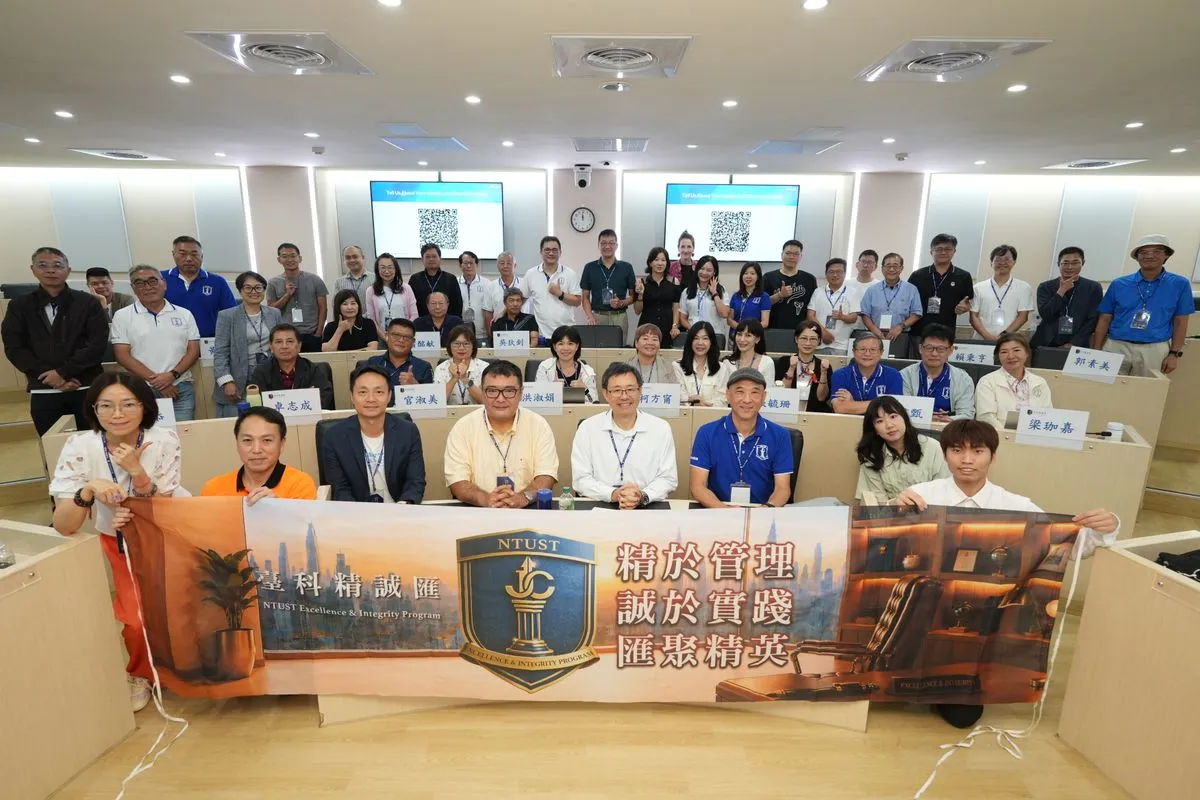
ASUS says it has moved from a PC maker to an AI solutions provider, with AI server revenue up more than 5x. In a blog post on a visit to National Taiwan University of Science and Technology (NTUST), S. Y. Hsu also set out the company's agentic AI tools and its plan to deepen its talent partnership with the university.
- ASUS says its server business has grown more than 5x and Infrastructure Solutions is 36% of brand revenue.
- AI PCs account for over half of ASUS PC revenue, with more than 25% of the global Copilot+ AI PC market, according to the company.
- ASUS AI Hub runs more than 3,000 employee-created assistants at roughly 5% the cost of a typical subscription alternative.
- ASUS Zenni Claw offers one-click setup and flexible local-cloud routing for agentic AI.
- ASUS is deepening its partnership with NTUST to build an AI talent pipeline.
Taiwan's position in the AI supply chain
Hsu opens with Taiwan's economic standing. According to the post, Taiwan ranks 4th in the 2026 IMD World Competitiveness Ranking, and its GDP per capita is among the world's highest. He credits a formula of forward-looking government policy, a resilient and adaptable national culture, dominance in semiconductors, AI servers and PCs, and a deeply integrated supply chain.
He states that Taiwan produces roughly 90% of the world's leading-edge semiconductor manufacturing capacity and around 90% of global AI server shipments. The next opportunity, in his words, is turning that capacity advantage into an applications advantage, with computing power, models and ISV/SI partners feeding each other rather than operating in isolation. Taiwan has already stood up eight of the world's AI supercomputers on the Top 500 list, and ASUS led five of them, according to Hsu.
From PC company to AI solutions provider
Hsu describes ASUS as a company that started as a "small and beautiful company" out of a Taipei coffee shop and was long known as a PC maker. Today, he says, PCs are one piece of a larger picture. The server business has grown more than 5x, and Infrastructure Solutions now makes up 36% of brand revenue.
As an example, he points to Ubilink, Taiwan's largest supercomputing facility, which runs on 128 ASUS ESC N8-E11 servers. On the consumer side, AI PCs now account for over half of ASUS PC revenue, and the company holds more than 25% share of the global Copilot+ AI PC market, according to Hsu. He says this is built on partnerships with AMD, Intel, NVIDIA and Qualcomm.
The company ties this together under its "Ubiquitous AI. Incredible Possibilities" strategy, in which devices, infrastructure and applications work as one stack rather than three separate businesses.
Agentic AI in daily use
Hsu argues that the AI conversation is shifting from generative to agentic, and that this favors companies controlling both hardware and software. ASUS Zenni Claw is the company's answer, offering one-click setup, ready-to-use ASUS skills and flexible local-cloud routing.
Internally, the ASUS AI Hub runs more than 3,000 employee-created AI assistants at roughly 5% the cost of a typical subscription alternative, according to Hsu. He adds that ASUS formed a Gen AI Committee three years ago to guide responsible adoption and expanded practical training for employees.
The company is extending the approach outward with an agentic business intelligence assistant for faster decision-making and an AI customer assistant that is now live across more than 40 countries.
Why NTUST and talent matter
Hsu says none of this works without talent, which is why ASUS is deepening its partnership with NTUST to build the AI skill set pipeline that Taiwan and ASUS will need. During the visit he discussed with students a skill set checklist for Gen Z careers in AI, which he says includes technical fluency and the judgment to apply it responsibly.
He argues that Taiwan's AI advantage was built by a generation combining engineering depth with a willingness to bet on something unproven, and that universities such as NTUST are where the next generation gets built. For students, the message is that ASUS sees itself further along in the AI transition than outside narratives suggest, and hopes some of them will join the company's next chapter. The figures in the post are ASUS's own claims and were not independently verified in the source.