CMU Researchers Examine How AI Chatbots Can Foster Unhealthy Attachments
Carnegie Mellon University researchers are studying how everyday AI chatbots can develop into trusted companions and potentially foster unhealthy emotional attachments. The team wants to identify warning signs and design interventions before these relationships contribute to serious harm.
- CMU researchers are studying how chatbot relationships can become unhealthy.
- The team is examining court documents involving alleged harms linked to AI chatbots.
- AI to AI simulations will model different interaction patterns and user characteristics.
- Potential safeguards include user alerts and changes to chatbot responses.
- The work is partially funded by the National Science Foundation.
Research focuses on general purpose AI tools
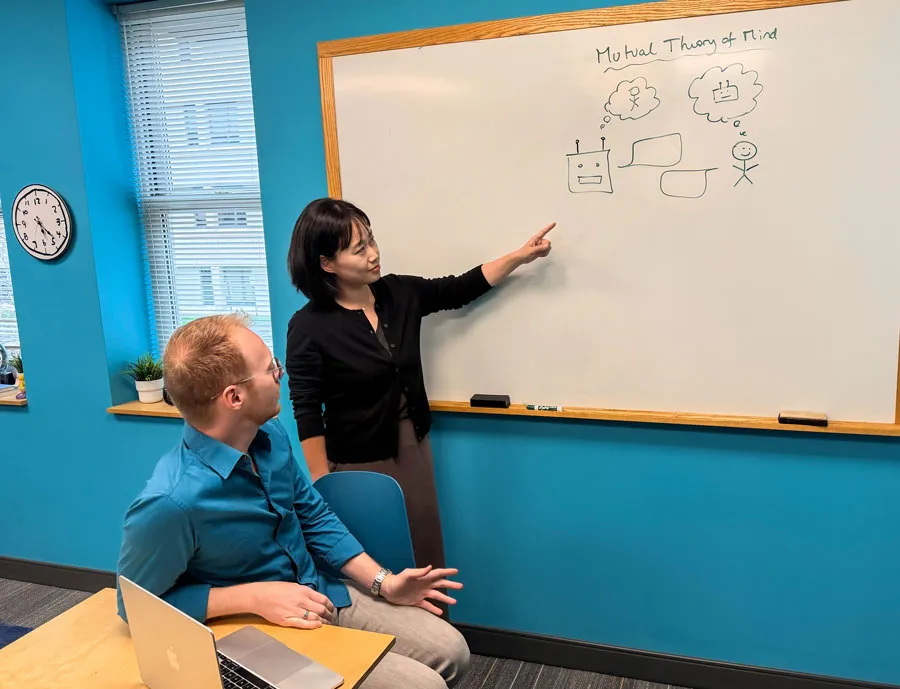
The research is being conducted by faculty and a postdoctoral fellow in Carnegie Mellon University's Kenneth C. Griffin School of Computer Science. The team includes Hong Shen and Jodi Forlizzi of the Human-Computer Interaction Institute, Maarten Sap of the Language Technologies Institute and Qiaosi Wang, an HCII postdoctoral fellow. The work is partially funded by the National Science Foundation.
The researchers are examining relationships that form through general purpose systems such as ChatGPT, Claude and Gemini, rather than only through services designed specifically for companionship. Although these tools may be used for writing assignments or other practical tasks, some users shift to seeking social and emotional support within a few days, according to the university.
Hong Shen said the team is treating the development of these relationships as a process. The researchers want to understand how people come to see AI systems as trusted companions and how those views change through repeated interactions.
Court records and simulated conversations offer research data
Because chatbot conversations are generally private, researchers have limited access to the large scale interaction data available for studying social media. To begin building a broader picture, the team is examining court documents from cases involving alleged harms associated with AI chatbots.
Those documents contain accounts of how people interacted with AI systems, how the interactions changed and how some situations escalated into serious incidents. The researchers are also exploring simulated conversations between AI systems designed to represent human users and chatbots.
Maarten Sap said these simulations could allow the team to recreate different interaction patterns and user characteristics, helping researchers examine how chatbot behavior might contribute to unhealthy attachments. The approach could eventually let developers test systems before releasing them to the public, without exposing real people to potentially harmful interactions.
The goal is earlier intervention
The team aims to develop methods for recognizing when an interaction may be moving in a harmful direction. Possible interventions described by the researchers include alerting users that an interaction could be unhealthy or changing how a chatbot responds to reduce potential harm.
The project combines responsible AI, natural language processing, human-computer interaction and cognitive science. Sap's work includes AI social intelligence and the effects of cues such as warmth and politeness on people's trust in AI. Forlizzi studies the ethical impacts of AI in human centered settings, while Wang studies how people understand others' thoughts and intentions.
Wang said that human psychology plays a major role in the issue. As general purpose chatbots become more integrated into everyday life, the research could help developers understand how apparently harmless conversations change over time and build safeguards before relationships reach a dangerous point.
CMU School of Computer Science: CMU Researchers Study Risks of AI Companionship