CSET warns US AI safeguards could weaken its edge over China
A convergence of political, commercial and ideological pressures could weaken the United States’ AI leadership, according to a new analysis from Georgetown’s Center for Security and Emerging Technology. The authors argue that individually defensible policies may produce damaging effects when their combined impact is ignored.
- CSET warns that separate AI policies could have harmful cumulative effects.
- The analysis distinguishes strategic benefits to China from evidence of Chinese interference.
- Safety, competition, infrastructure and public concerns can all shape AI restrictions.
- The authors urge safeguards that preserve U.S. innovation and competition.
A warning prompted by AI controversy
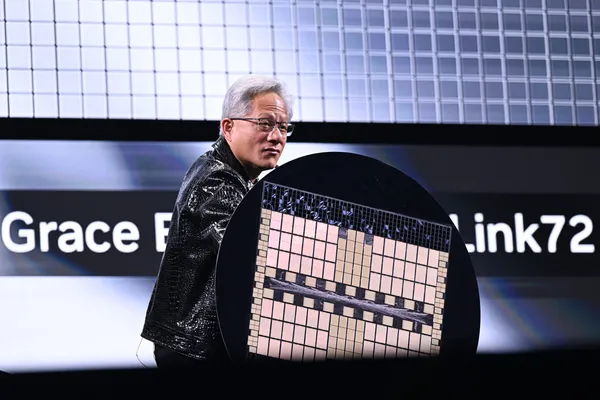
In the article, published November 14, 2026, William Hannas and Huey-Meei Chang examine the controversy surrounding Nvidia’s Jensen Huang and the questions it has raised about China’s efforts to acquire strategically important American technology. They say those questions deserve serious investigation, including the responsibilities of U.S. companies operating in commerce and national security.
But the authors also use the controversy to highlight a broader risk. The United States could respond to genuine security threats and other concerns about AI in ways that unintentionally undermine the technological base supporting its competitiveness and security. CSET says that an outcome benefiting China does not, by itself, prove Chinese responsibility or foreign interference.
Different groups could produce similar constraints
The analysis identifies several constituencies whose interests may converge on policies that slow American AI development, even without coordination. China has a strategic interest in narrowing the U.S. advantage and has devoted substantial resources to domestic AI development. Its August 2025 Artificial Intelligence+ initiative called for faster AI adoption, expanded computing and data resources, and a flourishing open-source ecosystem.
AI safety advocates raise concerns about catastrophic or existential risks from systems capable of autonomous action, sophisticated deception, or operation beyond human oversight. CSET describes those concerns as reasonable and often compelling, while warning that proposals for restrictions or pauses in frontier AI development could affect innovation. It points to the National Institute of Standards and Technology’s AI Risk Management Framework as an alternative focused on risk mitigation and trustworthy development without prescribing a general halt to research.
Established AI companies may seek regulatory clarity and safety standards, but complex requirements can impose costs that larger firms are better able to absorb. The article also says government agencies may expand oversight more readily than they reduce it, while public opposition reflects concerns about employment, privacy, environmental costs, energy consumption, and human autonomy.
Why cumulative effects matter
CSET argues that AI policy is often assessed issue by issue. Export controls are considered national security tools, safety rules address technological risks, antitrust measures protect competition, and data center restrictions respond to local concerns. The difficulty, according to the authors, is that the combined effects may receive less attention.
Limits on computing access could raise barriers for researchers and smaller firms. Misuse rules could discourage experimentation or favor established developers, while local data center restrictions could constrain infrastructure needed for domestic innovation. The authors say policymakers should ask whether benefits justify costs, whether less restrictive alternatives exist, and whether the combined policies remain compatible with U.S. technological leadership.
CSET says America’s decentralized system provides advantages through competition among firms, openness to talent, independent research, and the ability of new entrants to challenge established approaches. Its warning is that safeguards should address real risks without unnecessarily weakening those sources of strength as the United States and China compete to develop more advanced AI systems, including artificial general intelligence.
CSET Georgetown: Convergent Interests: How America Could Undermine Its Own AI Advantage