EPFL survey: Over 90% of students use AI for coursework

More than 90% of EPFL students use generative AI for their coursework, mainly as a learning tool, according to a survey run by an AI working group of the school's student delegates. EPFL's Teaching Support Center (CAPE) says it is concerned that students may be handing over too much mental effort to the technology.
- Over 90% of EPFL students use AI for coursework, mainly as a learning tool.
- The survey drew 359 replies from a representative sample of majors and study levels.
- 85% of respondents feel little or no pressure to use AI, and 60% were encouraged by a teacher to do so.
- 40% do not use AI outside their coursework.
- CAPE published two handbooks and warns that students may be outsourcing mental effort.
What the survey found
ChatGPT arrived in late 2022 and quickly found a place at EPFL, the Swiss technical university. According to EPFL, generative AI spread among students within two years, helped by still-malleable learning habits and a growing number of models that kept improving.
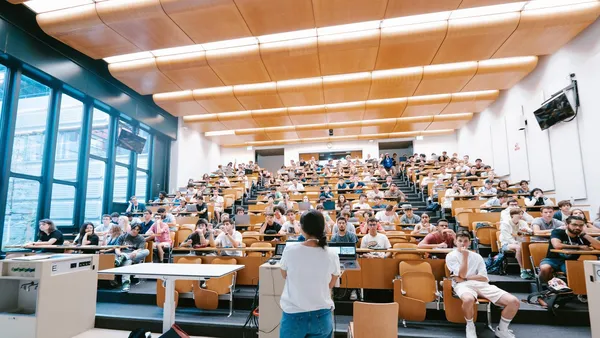
The survey was carried out by an AI working group made up of the school's student delegates. It was sent last winter to around 12,00 bachelor's and master's students (the figure appears as written in the source). The group received 359 replies from a representative sample of the different majors and levels of study.
Over 90% of EPFL students use AI for their coursework. EPFL says they mainly treat it as a learning tool and a quick, easy way to lighten their workload. The tasks named include:
- scheduling study time
- taking notes
- completing class assignments
- learning from mistakes
- taking practice exams
- managing stress
Around three-fourths of these users find AI effective for explaining course material, and two-thirds find it effective for solving weekly homework problems.
Differences by major and use outside class
How students use AI depends on their major. According to EPFL, computer science students take a more advanced approach, while mathematics students are more wary of the models' statistical predictions.
Use outside coursework is more limited. 40% of respondents do not use AI outside their studies. Of the 60% who do, it is mainly "to get answers to questions that come up during the day."
The survey also asked about pressure to use AI. 85% of students reported feeling little or no pressure. 60% said a teacher had encouraged them to use it, and one-third of those teachers also described how the technology is affecting various fields.
Concerns about learning and values
EPFL notes that using AI as a learning tool does not guarantee students use it correctly. This year CAPE published two handbooks that ask students whether AI is helping them learn or doing the learning for them.
"Our main concern is that students are delegating cognitive tasks, or in other words outsourcing some of the mental effort to a program or machine," says Olga Kasatkina, a researcher and teaching advisor at CAPE. "We don't yet have enough experience with AI to determine how it's affecting the learning process."
The survey suggests students see AI fairly objectively. They recognize its strengths and its potential as a powerful tool when used properly. They also worry about biases, the scope for misuse, such as polarizing debates, infringing on privacy or breaching IT security, and its damaging social and environmental impacts. One student comment quoted by EPFL describes a dilemma between the usefulness of AI for understanding math and a wish to avoid its energy consumption and environmental impact.
What it means for teaching
Student comments suggest that EPFL faculty members are mostly open to the technology. They accept its use for teaching and illustrative purposes, provided it is done in an informed, transparent, moderate and responsible way.
For the school, the findings point to widespread but largely purposeful use. The open question, as CAPE frames it, is how that use affects learning, which the school says it cannot yet determine.
EPFL News: Students' love-hate relationship with AI