IBM and Confluent Bring Time-Series Models to Streaming Data
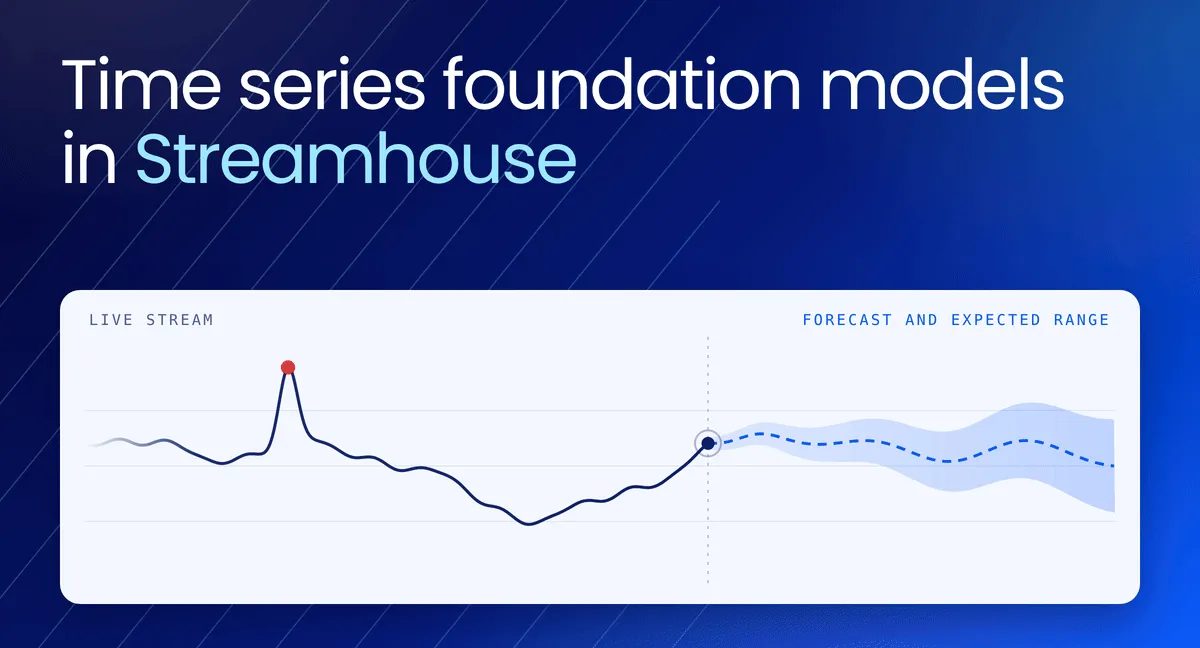
IBM and Confluent are bringing time-series foundation models directly into streaming data workflows, enabling forecasting, anomaly detection and optimization closer to real-time business decisions. The models are available natively in Confluent Cloud and on premises, and run on CPUs rather than requiring GPUs.
- IBM and Confluent are integrating time-series models into Confluent.
- The models support forecasting, anomaly detection and optimization.
- They run on CPUs in Confluent Cloud and on premises.
- IBM Research says the model family has more than 50 million downloads.
- Use cases include production, retail anomaly detection and supply chain planning.
Time-series intelligence moves into the Streamhouse
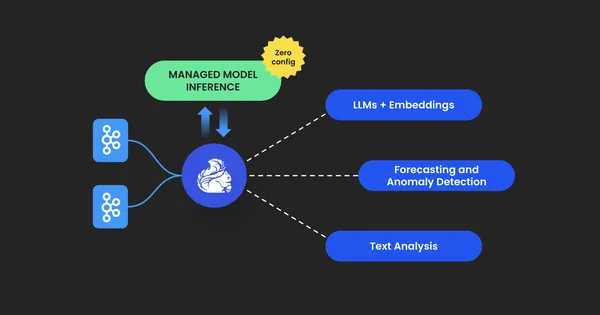
IBM Research said its time-series models can now run as built-in functions inside Confluent, both in the cloud and on premises. In Confluent Cloud, the models are fully managed, while Confluent Platform for Apache Flink can run them within an organization’s own infrastructure.
The announcement describes the models as a way to work with numerical data such as machine readings, payments, sales, orders and inventory changes. Time-series foundation models learn general patterns from diverse historical data and apply that knowledge to new series and tasks. According to IBM Research, this can give teams a common starting point without requiring a separate model for every series. Teams can also fine-tune a model or combine its outputs with other data and business logic.
The models are integrated with Apache Flink, which can prepare streaming data, invoke forecasting and anomaly detection, and make model results available alongside the events that produced them. Confluent’s Streamhouse architecture is designed to continuously capture, process, govern and serve current business context to applications, analytics and agents.
CPU deployment and operational use cases
IBM Research said the model family has received more than 50 million downloads. The models run on standard CPUs, allowing them to operate alongside a streaming pipeline in the cloud or on premises. The company says this can reduce the need for dedicated GPU infrastructure and simplify deployment.
The announcement highlights applications across manufacturing, retail, banking and airlines. In manufacturing, a pretrained TTM model could read production telemetry and quality measurements every 10 minutes, then forecast the share of products expected to meet specifications four hours ahead. If the forecast falls below a plant target, an optimization process can evaluate control settings before an operator changes the production line.
For retail, the AI_DETECT_ANOMALIES function can establish an expected range for each sales series using recent history. A team can choose the confidence level, then combine an unusual reading with inventory and store data to help identify a likely cause, such as a shelf problem or the need to replenish stock.
Predictions can be refreshed as events change
IBM Research presents streaming time-series models as a way to connect predictions with the operational systems responsible for the next action. Forecasts can be refreshed as new observations arrive, subject to the model’s requirements and the configuration of the data pipeline. Results can also be routed to applications where teams combine them with business context, rules and human judgment.
One supply chain example uses AI_FORECAST to produce a 28-day demand forecast across products and stores, including a P10, P90 range. As new sales data arrives, a planning application can combine the forecast with inventory, lead time and a planner’s chosen service level to calculate a reorder point.
For users, the announcement points to a shift from analyzing time-series data after an event to using forecasts and anomaly signals while operations are still changing. For businesses, the combination of streaming data, compact CPU-based models and application logic could support more timely decisions without requiring each team to build and maintain an individual model for every series.
Hugging Face: Time-Series Models in the Streamhouse: A New Frontier and Use Cases