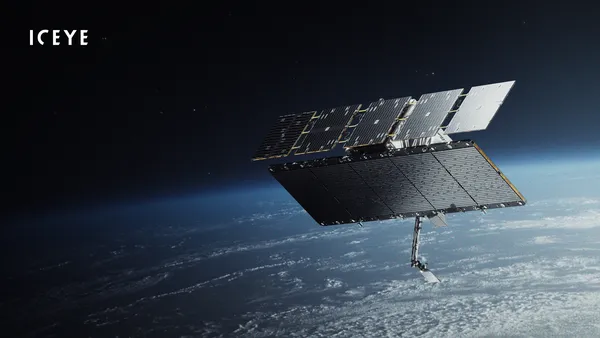
ICEYE and Nokia team up on sovereign LEO satellite links for governments

ICEYE and Nokia have announced a partnership to develop secure, sovereign broadband satellite communications systems in low Earth orbit (LEO) for governments. According to the companies, the first communications satellites are expected to launch in 2028.
- ICEYE and Nokia will jointly develop sovereign LEO broadband satellite communications systems for governments.
- Nations are to own and control the satellites, ground segment and terminals.
- The first communications satellites are expected to launch in 2028.
- The systems are designed to complement military and commercial networks, not replace them.
- Targeted uses include defense, border security, emergency services and disaster response.
Nations to own satellites, ground segment and terminals
ICEYE, which describes itself as the European leader in sovereign intelligence from space, and Nokia, a global leader in connectivity infrastructure, said the jointly developed systems are meant for government missions. These range from defense and border security to emergency services and disaster response.
Built on what the companies call trusted European technology, the systems will give nations ownership and control of the satellites, the ground segment and the terminals. The companies say the systems are to be owned and operated by the nations that use them, and are designed for dual use.
The partnership will integrate satellites, ground infrastructure and ruggedized end-user terminals. In doing so, it extends ICEYE's sovereign intelligence from space business model to satellite communications.
Why resilient communications matter
The companies point to a basic vulnerability: when terrestrial networks are disrupted or compromised, defense forces, first responders and civil authorities risk losing access to the information and command systems they depend on. Governments, they argue, need communications infrastructure that stays available under the most demanding conditions and that they can fully own and control.
The planned systems will deliver targeted, high-throughput, low-latency connectivity over priority mission areas. They are designed to complement military and commercial networks rather than replace them, adding reach, resilience and capacity.
What each partner brings
The partnership combines ICEYE's track record in delivering sovereign satellite missions with Nokia's experience in secure networking technologies and its growing defense portfolio.
ICEYE CEO and co-founder Rafal Modrzewski said nations must be able to fully own and control their communications, "without dependency on a foreign commercial operator's terms of service." He added that ICEYE delivered Poland its own radar satellite system in under a year, and that working with Nokia lets the companies move at a similar speed for satellite communications.
Nokia President and CEO Justin Hotard framed the project around real-time operations. He said sovereign operations depend on the ability to sense, decide and act in real time, and that physical AI makes that possible only with secure, resilient connectivity across land, sea, air and space.
What it means for governments and the market
The announcement targets government and defense customers that want their own communications capacity rather than reliance on external providers. The source does not give pricing, customer names or technical performance figures, and the 2028 date refers to the expected launch of the first communications satellites.
Modrzewski and Hotard are due to speak at the Helsinki Security Forum on October 2 in a session titled "How to Salvage Europe's Technological Sovereignty."