Envision founder Lei Zhang named TIME100 Climate 2026 Titan
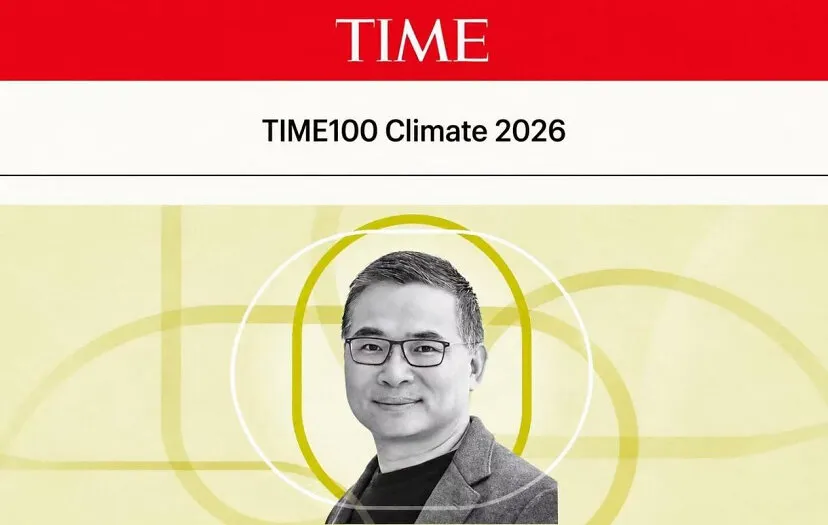
Lei Zhang, founder and chairman of Envision, has been named a Titan on the TIME100 Climate 2026 list for his work linking clean energy and artificial intelligence. The recognition highlights Envision’s approach of combining renewable power, energy storage and AI computing infrastructure.
- Lei Zhang, Envision’s founder and chairman, was named a TIME100 Climate 2026 Titan.
- The recognition focuses on his work connecting clean energy and AI.
- Envision is developing data centers powered by dedicated wind, solar and battery systems.
- Mission Gobi aims to reach 5 GW of green AI data center capacity by 2030.
Recognition focuses on AI and clean energy
TIME100 Climate recognizes 100 leaders for business actions on climate that are measurable, successful and equitable. Zhang was included in the Titans category, which TIME describes as inspiring greater ambition.
According to the announcement, TIME’s profile highlights Zhang’s work to use AI’s growth to accelerate the expansion of clean energy. It also points to Envision’s development of data centers powered by dedicated wind, solar and battery systems.
The recognition comes as AI increases demand for computing capacity and energy. Zhang’s stated view is that this demand should speed up clean energy development rather than intensify constraints on energy systems, which are facing growing limitations.
Envision links renewable power with AI infrastructure
Envision is putting that approach into practice by combining renewable energy with AI infrastructure. The company’s model is intended to allow energy generation and computing capacity to expand together, addressing the infrastructure challenge of increasing processing capacity without overloading power systems.
Mission Gobi is part of this strategy. The initiative aims to reach 5 GW of green AI data center capacity by 2030. The announcement presents the project as an example of how AI computing can be developed alongside renewable energy resources.
Envision Galaxy Campus is also cited as a demonstration of the same idea. The campus shows how AI computing and renewable energy can scale together, according to the announcement.
Why the recognition matters for AI infrastructure
The announcement frames Zhang’s ambition as broader than supplying AI systems with clean electricity. It describes a goal of building future energy systems that can turn AI growth into a catalyst for the global energy transition.
For AI infrastructure, that means treating power generation, storage and computing as connected parts of expansion rather than separate projects. Envision’s projects offer one example of how dedicated wind, solar and battery systems could be paired with data centers as demand for AI processing grows.
The TIME100 Climate recognition gives visibility to that infrastructure approach and places Zhang’s work at the intersection of climate action and AI development. The announcement does not provide further details about the projects’ commercial availability or operating performance.