Microsoft AI Economy Institute fellows publish essays on AI in education
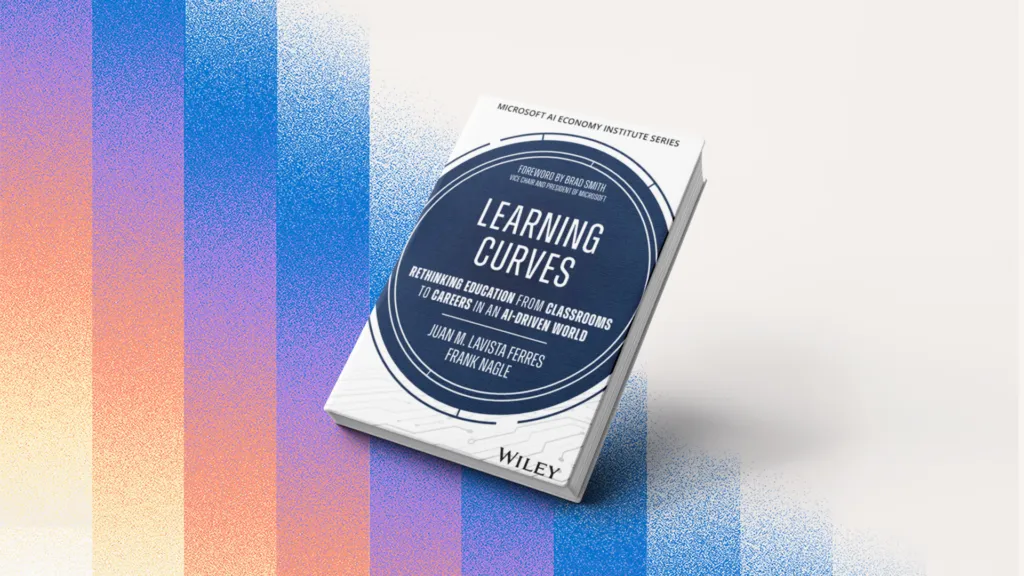
The Microsoft AI Economy Institute (AIEI) has released Learning Curves: Rethinking Education from Classrooms to Careers in an AI-Driven World, a collection of research-driven essays on how AI is changing education and early careers. According to Microsoft, the book is meant to help guide choices that will determine who gets access to AI and the opportunities it brings.
- Microsoft's AI Economy Institute published Learning Curves, essays from its second cohort of Senior Fellows.
- Microsoft cites national AI adoption above 70% in the UAE and low single digits across much of sub-Saharan Africa.
- More than half of US teenagers already use AI chatbots for schoolwork, according to the post.
- Researchers stress teacher training suited to local contexts, since there is no one-size-fits-all approach.
- Access to AI alone does not ensure success; organizational readiness and human-centered design also matter.
A book from the second cohort of AIEI Senior Fellows
Learning Curves brings together work from the second cohort of Senior Fellows at the Microsoft AI Economy Institute. Microsoft describes the institute as a flagship think tank that produces research and convenes experts to examine how AI is reshaping work, education and the broader economy.
The essays look at the earliest stages of learning and work: K-12 classrooms, community and technical colleges, college-to-work transitions and entry-level jobs. The central question, according to Microsoft, is what it will take for this transformation to widen opportunity rather than deepen divides across institutions, communities and countries.
The announcement frames education as an important tool for addressing the uneven spread of AI. Microsoft points to national adoption above 70% in countries such as the United Arab Emirates, against low single digits across much of sub-Saharan Africa, a gap of close to tenfold.
Classrooms: promise and risks
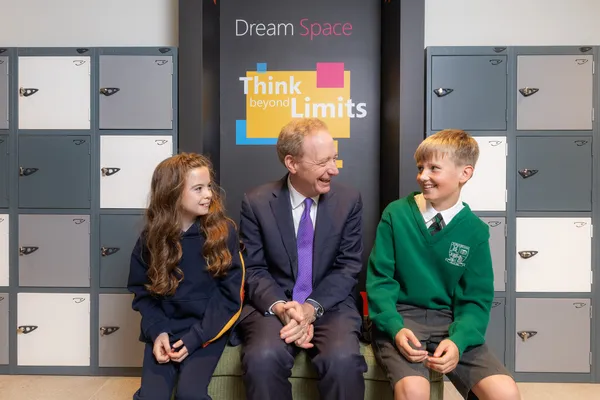
The post, written by one of the book's contributors, notes that more than half of US teenagers already use AI chatbots for schoolwork. The author, who teaches a computer science class to elementary school students, says they have seen the promise of AI in education first-hand.
The post is also direct about downsides. While AI can help with accessibility and individualized learning, it can also create over-reliance, contribute to student cheating, or prevent students from recognizing when information may be false. Microsoft argues that rapid deployment in K-12 needs a sober assessment that looks beyond the technology to how students, teachers, parents and society use it.
The author also suggests that earlier classroom technologies, from the calculator to the smartphone, show that outcomes depended less on the tool than on the choices adults made about how to use it.
Teacher training and local context
Several chapters focus on teachers. Joseph Orero of Strathmore University's School of Computing and Engineering Science argues that teachers are not resistant to AI in classrooms but need proper training to adapt and teach critical skills. His contribution explores game-based learning with AI-enabled African languages.
Another chapter examines Arabic education and finds that the main barrier teachers met when introducing AI writing assistants was Arabic digital literacy, particularly students' typing ability. Across the research, the post says, a common theme emerged: there is no one-size-fits-all approach to developing AI competency, and training must fit local knowledge and teaching practices.
Frank Nagle, now Microsoft's Chief AI Economist, and Sarah Rodriguez of Virginia Tech, along with other researchers, argue that nontraditional pathways such as apprenticeships and two-year-degree programs, particularly virtual ones, are more nimble and better able to adapt their curricula to the fast-changing AI field.
From school to work
On the transition to work, the post says successful AI integration stays human-centered, with attention to organizational change, durable human skills like empathy and judgment, strong employer partnerships and learner needs. Research by Laura Nuriski of the Centre for European Policy Studies (CEPS) highlights that access to AI alone does not ensure success. Technology transfer, data infrastructure and organizational readiness are also key indicators.
The author's closing view is that AI does the most good when it strengthens human capability and the most harm when it substitutes for it. For schools, that means tools that serve learning rather than stand in for it. For education systems and employers, the book's message, as presented by Microsoft, is that training, local context and organizational readiness matter as much as access to the technology.