Microsoft unveils Perception to counter faster, AI-driven cyberattacks
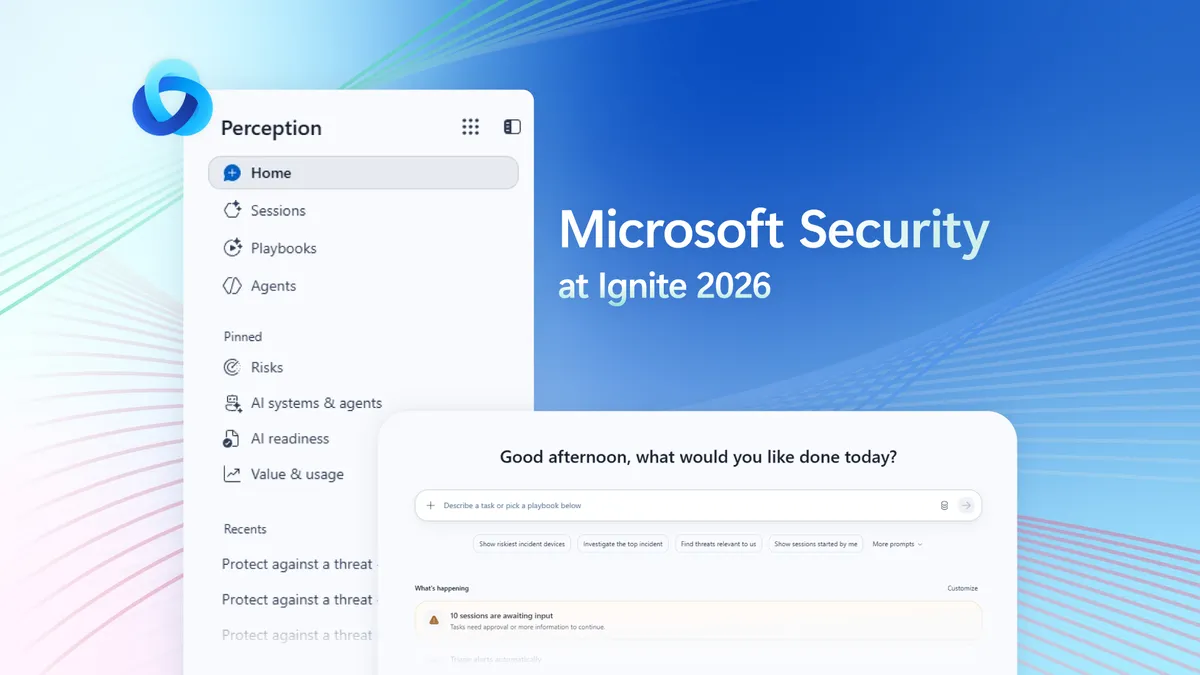
Microsoft is expanding its security platform for an era in which AI can discover and exploit software vulnerabilities at machine speed. The company says Microsoft Perception, now generally available, coordinates specialized agents to simulate attacks, investigate incidents and carry out remediation.
- Microsoft says AI is accelerating vulnerability discovery and exploitation.
- Microsoft Perception is now generally available.
- Red, blue and green team agents work through coordinated playbooks.
- Microsoft says its ecosystem produces more than 165 trillion signals a day.
- Vulnerability shielding is available in preview.
AI is shortening the path from flaw to exploit
Microsoft says the time between discovering a vulnerability and producing a working exploit is shrinking from months to minutes. The company points to two critical remote code execution vulnerabilities disclosed by PHP this fall. Within roughly a day of the disclosure, security researchers had developed a working, weaponized exploit, Microsoft says. By the following week, the research covered additional PHP versions and configurations.
At the time of disclosure, tens of millions of internet-facing PHP services were running affected versions. Nearly two weeks later, about 29 million services remained vulnerable, according to Microsoft. The company says the exposed systems included infrastructure used by banks, healthcare providers and energy companies.
Microsoft also says that attacks are becoming increasingly automated. AI has moved from assisting attackers to executing tasks and planning and running entire campaigns, according to the company. At the same time, AI agents can access data, applications, tools and other agents, which means they can make mistakes, be manipulated or be compromised like human insiders.
Microsoft describes a three-layer security stack
Microsoft says its cyber stack for the agentic era has three layers: signals, context, and agents, harness and models. The signals layer uses sensors and actuators across products and infrastructure including Microsoft Defender, Microsoft Entra, Microsoft Intune, Microsoft Purview and Microsoft Sentinel. Sensors identify problems, while actuators can contain a device, revoke an identity’s access or block an agent at the authorization layer.
The company says more than 500 connectors link Microsoft’s products with the wider security ecosystem. Together, Microsoft and partner sources produce more than 165 trillion signals a day. Those signals are enriched with threat intelligence and organized into real-time context about each customer’s digital estate.
At the top of the stack, specialized security agents work as teams through playbooks. A harness directs those teams, while a multi-model approach assigns the appropriate model to each task. Microsoft says this design is intended to deliver security outcomes at scale while supporting precision, recall and token efficiency.
Perception coordinates red, blue and green team agents
At Microsoft Ignite 2026, the company said Microsoft Perception is now generally available. The platform orchestrates red, blue and green team agents through playbooks in a closed loop.
Red team agents simulate attacks before a breach occurs. Blue team agents detect, triage and investigate attacks, while green team agents fix and remediate problems. Microsoft says security teams set the guardrails and approve high-impact actions, while automated triggers can launch playbooks when an incident meets defined criteria.
Perception also includes cost management dashboards and a cost estimator to help organizations track AI usage, forecast spending and connect costs with security outcomes. Microsoft says Integrated Security Operations Center in Microsoft Defender is generally available for core capabilities, bringing together SIEM, user and entity behavior analytics, threat intelligence, and threat protection and disruption.
The announcement reflects Microsoft’s view that security teams need to automate more of their response as AI increases the speed and scale of attacks. The company is also previewing vulnerability shielding, which applies targeted, temporary protection to vulnerable assets while defenders prepare permanent remediation, and says Perception will receive AI Readiness Initiatives in preview in January 2027.