Mintlify Launches Mentha, a Design System Built for Humans and Agents
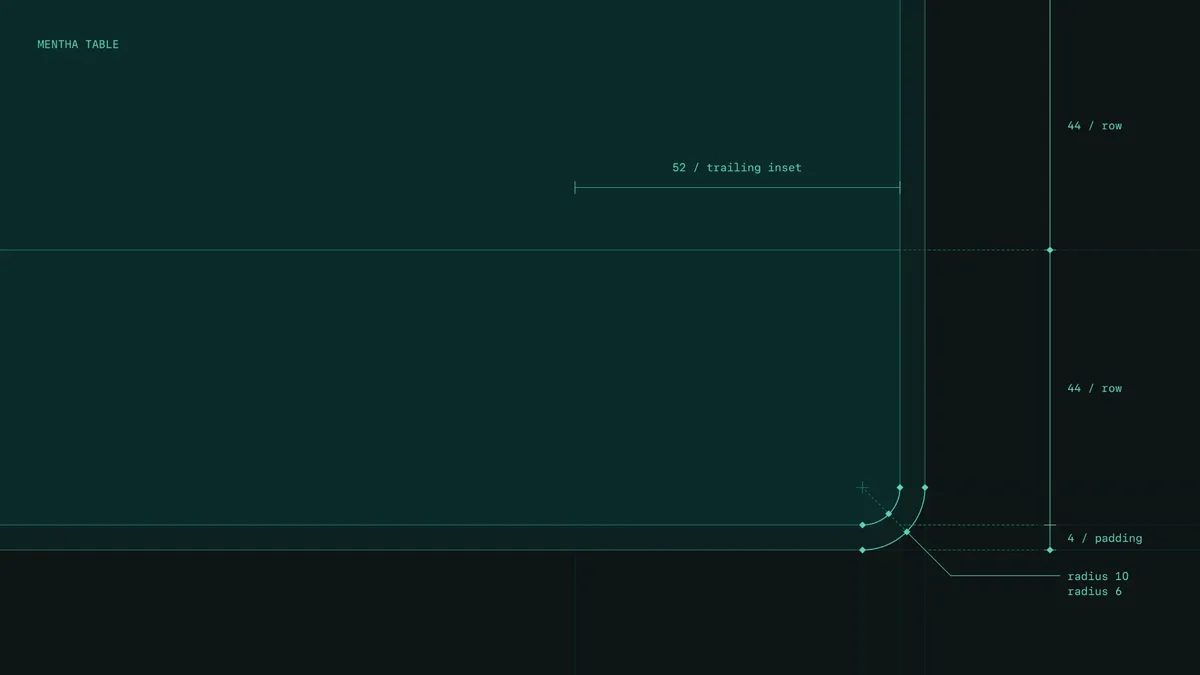
Mintlify has introduced Mentha, a new design system that bakes the company's design judgment into its components so that everyone building with agents starts from a good place. The system is live in the dashboard now, with docs components planned next, according to the company.
- Mintlify introduced Mentha, a new design system named after the Latin word for mint.
- Size and variant options were cut, and nothing is added without a repeating use case.
- Cooler mint tones were added to the brand green so in-product brand elements are not mistaken for success states.
- Four shadow levels were added, where the old system used none.
- Mentha is live in the dashboard, with docs components coming next.
Fewer options, fewer inconsistent decisions
According to Fay Dakrouri of Mintlify's design team, the old system had too many variants. Every extra option became a decision someone had to make, and different people might make it differently. The result was inconsistency that came from many individually reasonable choices: one screen uses a 20px icon, another a 16px or 14px icon, and each looks fine alone. Side by side, the product feels stitched together.
Mentha cuts size and variant options down to what is actually needed. Nothing is added before there is a true, repeating use case. Otherwise, the post says, it is not a component but an override. Dakrouri designed the interface itself first, before turning anything into components, which let the team explore the patterns that later became the guiding constraints.
Patterns, interaction rules and a wider green palette
The team designed patterns for problems that come up again and again. If a problem is not new, designers start from what already works. If it is new, they design it carefully and add it to the system. Mintlify says patterns also help agents: when an established pattern already answers the questions, the agent has less to guess and less to get wrong. Users benefit too, since something learned once works the same way everywhere.
Interaction rules are part of the system. Hover is meant to show interactivity, not functionality, so hover is not used to reveal actions, which are harder to find on touch screens and for keyboard users. For accessibility, nothing hides behind hover. The pointer cursor is now used only on links.
The palette also changed. The previous color scales used brand green for things like link hovers, which looked like a success state because it sat too close to a true green. Mintlify added cooler mint tones to the brand green palette. Brand assets use the whole palette, while in product, anything brand-related uses only the cool shades so it is not mistaken for a success state.
Shadows are new as well. The previous system used none, but Mentha adds four shadow levels that get stronger based on where an element sits. Something resting on the page gets a lighter shadow than something floating above it. Some shadows sit on an inner component rather than as the usual outer box shadow.
Designed with agents in mind
Mintlify says agents are part of how it builds now. In the company's view, agents build fast but do not create anything novel or nuanced, and tend to reach the fastest conclusion in the most generic way. Humans bring judgment and a sense of craft, which the post describes as what keeps the product's soul.
The team has noticed that the more instructions, skills and component-embedded constraints an agent receives, the more accurate its first direction is. The post stresses that the output is still by no means ready for production, but it is a better start than default agent output with no constraints. Someone still has to know what problem is being solved, judge with taste whether the result solves it, and keep iterating based on user feedback.
What it means going forward
Design and design engineering still make the final calls, but the company says having the system means fewer decisions are made from scratch. In the post's words, design judgment is now basically in the room even when designers are not.
Mintlify describes Mentha as unfinished and says it never will be. It is live in the dashboard now, and the next step is bringing it to the docs that customers publish, as components.
Mintlify: Inside Mentha, Mintlify's new design system