Nonhuman characters in animated films remain overwhelmingly male, study finds
Female human characters in animated films now get close to half of the screen time, but female nonhuman characters such as animals, monsters and robots receive only about 25%, according to a new UC Berkeley study. The researchers say the gap shows that progress for human characters may be offset elsewhere.
- A UC Berkeley study of 224 top-50 box office animated films from 1937 to 2025 finds female nonhuman characters get about 25% of nonhuman screen time.
- Female human characters receive close to half of total screen time and have gained since the 1980s.
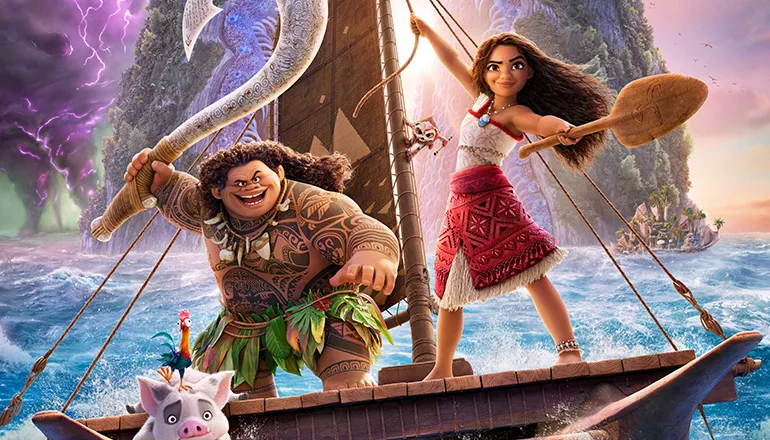
- Moana and its sequel give female nonhuman characters no screen time; Frozen and Frozen II give them about 13% and 1%.
- Raya and the Last Dragon and Inside Out 2 gave female nonhumans nearly 79% and 78% of nonhuman screen time.
- The data, code and models are publicly available on GitHub.
A gap hidden among animals, monsters and robots
The study, titled "Measuring Gender Representation in Animated Films," looked at where gender imbalance persists in animation. Female human characters have gained screen time since the 1980s and are shown together more often than in earlier animated films. Among nonhumans, which the study defines as animals, monsters, robots, magical creatures and similar beings, the picture is different: only about 25% of screen time goes to female characters.
Some well-known films illustrate the divide. According to UC Berkeley, Moana and its sequel give female nonhuman characters no screen time at all. In Frozen and Frozen II, female nonhuman characters receive about 13% and 1% of total screen time, respectively.
"We knew from prior research that there was a gender disparity in live-action films, male characters generally have three times as much screen time as female characters, but we were surprised that there's an even stronger male skew when looking at the screen time of nonhuman characters in animated films," said David Bamman, an associate professor in Berkeley's School of Information and lead author of the study.
How the researchers measured it
The team analyzed 224 animated films that ranked among the top 50 movies at the box office each year from 1937 to 2025. They focused in particular on films released in 1980 and after, when the number of animated films began to take off. Computational models were trained to recognize characters on screen, such as Olaf in Frozen or Judy Hopps in Zootopia, and to measure how much screen time each received. The researchers manually checked the models' work in 100 of the films.
For the gender analysis, nonhuman characters had to have a speaking part played by a voice actor. Because animated characters do not self-identify, the researchers describe their gender classifications as necessarily interpretive. They relied on voice-actor gender and fan-community descriptions, including pronoun use, and manually reviewed cases where the evidence was unclear or sources disagreed.
Bamman co-authored the study with Allison Cooper of Bowdoin College and Berkeley students Reina Kushihashi, Ruby Alvarez Rubio and Madison Mar. To run the analysis at scale, Bamman worked with the UC Berkeley Samuelson Law, Technology and Public Policy Clinic to obtain an exemption from the U.S. Copyright Office, which allows researchers to circumvent digital rights management on DVDs for research purposes.
Signs of progress, and open questions
Not every recent film follows the pattern. Raya and the Last Dragon and Inside Out 2 gave female nonhuman characters a large share of nonhuman screen time, nearly 79% and 78%, respectively. Even so, the authors note that nonhuman characters remain predominantly male across the study.
The team did not measure how this skew affects children, the primary audience for animated films. Bamman points to decades of research showing that media shapes how children see themselves and interact with others. "It shapes the ways children get acclimated to what's considered the norm," he said.
The group is also studying how the use of close-ups in live-action film has changed over the past century. In live-action movies, Bamman said, women receive more close-ups than men, a disparity the researchers did not find in animation.
What it means
The findings suggest that tracking gender representation only among human characters misses part of the picture in animation. Bamman said the work lays a foundation that "does call out for more research getting at more causal questions of what happens when you change this kind of representation."
The research was supported by the Humanities and AI Virtual Institute (HAVI), a program of Schmidt Sciences, and used UC Berkeley's Secure Research Data and Compute Platform. The researchers have made their data, code and models publicly available through a GitHub repository.
UC Berkeley: In animated films, nonhuman characters are still overwhelmingly male