SQL Server on Azure Local reaches general availability, with offline support
Microsoft has made SQL Server on Azure Local generally available for both connected and disconnected operations. According to the company, the release lets organizations run SQL Server in their own datacenters and edge locations while keeping control over infrastructure, connectivity and data placement.
- SQL Server on Azure Local is generally available for connected and disconnected operations, according to Microsoft.
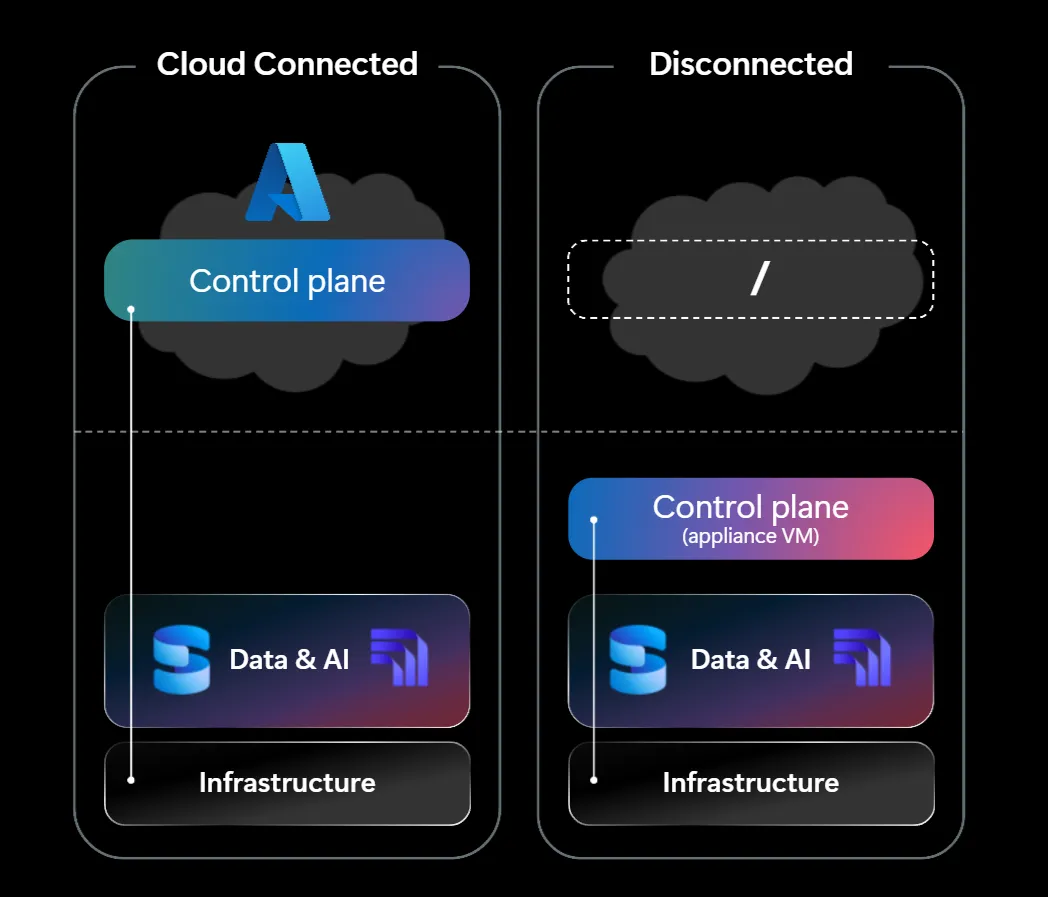
- Connected setups use Azure Arc for management; Azure Local Disconnected Operations keeps running locally without external connectivity.
- Foundry Local on Azure Local, for running AI models next to SQL Server, is still in preview.
- Eligible existing SQL Server licenses can be reused; connected deployments can also use pay-as-you-go via Azure Arc.
- Supported workloads run on virtual machines with Windows Server or Linux.
Two deployment models for different connectivity needs
Microsoft says some of the world's most critical databases run in places where cloud connectivity cannot be assumed. Its examples are a remote industrial site that must keep production systems running without external connectivity, and a regulated organization that needs sensitive data and processing to stay within sovereign boundaries.
Azure Local brings Azure infrastructure to customer-owned environments. On top of it, customers can pick between two models:
- Connected environments: SQL Server runs locally on Azure Local, and Azure Arc is used to manage SQL Server resources through Azure.
- Azure Local Disconnected Operations (ALDO): SQL Server runs where external connectivity is restricted, intermittent or unavailable, and operations continue locally.
Microsoft says this allows organizations to choose the approach that fits each environment instead of making the same connectivity decision across their entire data estate.
According to the FAQ, the service supports SQL Server workloads on virtual machines running Windows Server or Linux.
AI models next to the data
Microsoft also points to generative AI on existing enterprise data, including information that cannot leave an organization's environment. With Foundry Local on Azure Local, customers can run AI models on Azure Local infrastructure alongside SQL Server, which brings inferencing closer to the data.
The company says this is meant to let organizations explore AI-powered applications while keeping sensitive information and processing in their own environment. It describes the approach as particularly valuable in sovereign, regulated and edge scenarios, where control over where models execute and where data is processed matters.
Foundry Local on Azure Local is still in preview. Microsoft states that, as of September 29, 2026, availability and capabilities may change before general availability.
Licensing: reuse of existing SQL Server investments
SQL Server is licensed separately from the Azure Local infrastructure platform. Microsoft outlines two paths:
- Connected deployments: customers can use eligible existing SQL Server licenses, including licenses with Software Assurance or qualifying subscriptions, or choose pay-as-you-go licensing through Azure Arc.
- Fully disconnected deployments: customers can use eligible existing SQL Server licenses through Azure Hybrid Benefit.
Microsoft says eligible licenses can be used according to applicable licensing terms.
Who it is aimed at and what it means
Microsoft says the offering is designed for organizations that need local control because of sovereignty, regulatory, latency, operational continuity or edge requirements. It names public sector, defense, financial services, healthcare, manufacturing, energy and other regulated or connectivity-constrained environments.
For these customers, the release offers a way to modernize SQL Server deployments close to their data, applications and operations, with Azure-consistent infrastructure and, in preview, local AI capabilities. Microsoft frames the goal simply: customers should not have to move sensitive data elsewhere just to begin building intelligent applications around it.
Microsoft Learn provides deployment guidance covering hardware selection, SQL Server installation, monitoring, performance tuning, high availability and related Azure hybrid services.
Microsoft Azure: SQL Server on Azure Local is now generally available