Roboflow Explains Why It Sells Edge AI Hardware
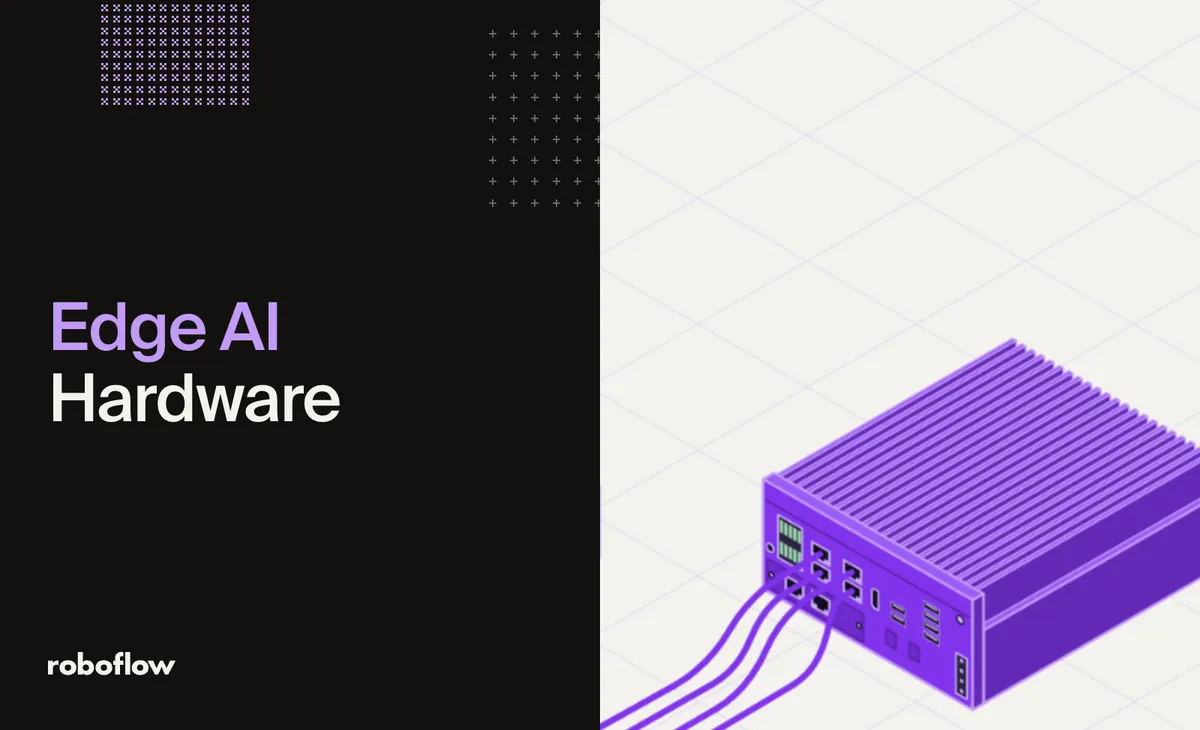
Roboflow says its edge AI appliances address the operating system, driver and recovery work that companies face when deploying computer vision on hardware they manage themselves. The company offers Roboflow Edge appliances from $8,000, including five years of RoboflowOS over-the-air updates.
- Roboflow Edge appliances start at $8,000.
- Five years of RoboflowOS over-the-air updates are included.
- RoboflowOS runs separately from applications in containers.
- Network settings can persist across device restarts.
- Customers remain responsible for cameras, lighting, validation and plant networking.
The maintenance burden behind edge AI
Roboflow’s Deployment Manager lets customers run computer vision models on their own devices and manage those devices through the Roboflow platform. Customers link a device once, then securely push models and Workflows to it.
According to Roboflow, that covers only part of what is needed for a reliable vision system. Companies managing their own hosts must also select and maintain the operating system, drivers, JetPack versions and camera integrations. They may need to recover failed devices, apply security patches, preserve network settings after a reboot and qualify updates against their inference runtime and cameras.
Roboflow gives several examples of failures that can require manual intervention. A power outage could cause camera network ports to lose their static IP addresses. A Jetson Ethernet driver bug could disconnect cameras, while a full log file could fill a disk and prevent access to the host. In some cases, the company says, recovery may require reflashing a device or sending a technician to the site.
RoboflowOS combines the hardware and software stack
Roboflow says it sells hardware because some of these problems can only be addressed by providing the full stack together. Its appliances use NVIDIA Jetson modules and ship with RoboflowOS, which the company describes as an immutable operating system with over-the-air updates.
Roboflow maintains the operating system image, kernel, drivers and NVIDIA platform updates for its appliances. The company says it tests each image before release on the same hardware customers receive, while customers still test their cameras and Workflows under production conditions.
The appliances run the inference runtime and edge services in containers, separately from the read-only operating system image. This allows applications to be updated or replaced without changing the operating system. Roboflow also says it ships camera driver and network fixes in the RoboflowOS image, including optimizations for supported GigE camera interfaces.
Updates and network settings are managed remotely
RoboflowOS stores wired network settings, including static addresses, gateway, DNS, MTU and camera-port tuning, in persistent storage on the device. At boot, it rebuilds the live network configuration from that store, which Roboflow says allows settings to survive a restart.
Customers can change network settings through the Roboflow platform, a USB drive or the local setup screen. When settings are changed through the platform, the device checks whether it can still reach Roboflow’s servers and starts a rollback to the previous settings if it cannot.
The operating system update agent updates RoboflowOS separately from applications. Roboflow says it can replace the base image, update individual extensions and deliver driver fixes over the network. Major JetPack upgrades are qualified separately for each board, so different hardware can move to a new release on its own schedule.
What customers still need to manage
Roboflow’s model does not remove every deployment responsibility. Customers choose the camera view, lighting, mounting and equipment protection, connect the system to plant controls, and validate inspections with their own parts, lighting and line rate.
The company also says plant networks, firewalls, gateways and change-control processes remain the customer’s responsibility. Vision systems commonly operate on plant operational technology networks, where outbound connections need approved firewall rules and maintenance work may require scheduled windows.
Roboflow’s pitch is therefore aimed at companies that want to use edge computer vision without maintaining every layer of a Jetson deployment themselves. Customers can still use devices they already own, while the company positions its appliances as a way to shift operating system, driver and hardware compatibility work to Roboflow.
Roboflow: Why Roboflow Sells Hardware, and When to Use Your Own