Windward Buys Azimut.ai to Add Camera-Based Vessel Tracking to Its Maritime AI
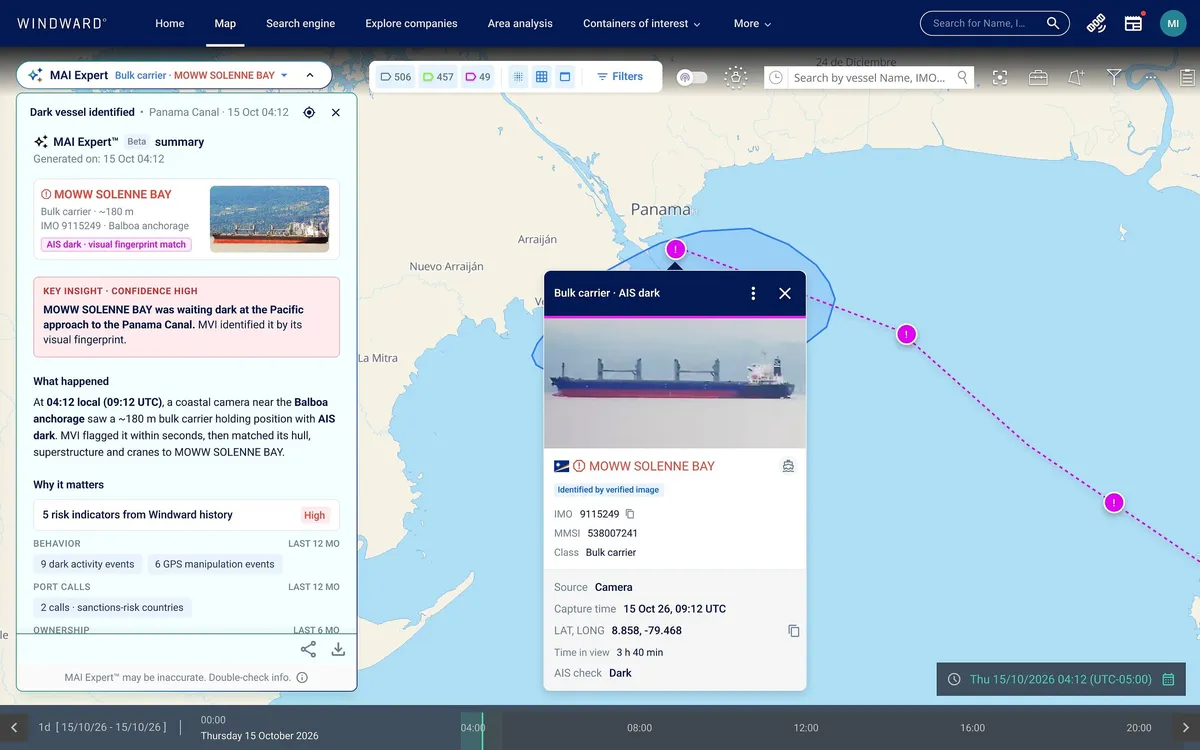
Maritime AI company Windward has acquired Azimut.ai, a maritime visual intelligence firm, adding an optical sensing layer that identifies and fingerprints vessels in real time at chokepoints and ports. According to Windward, the layer makes vessels visible even when they go dark to evade detection.
- Windward has acquired maritime visual intelligence company Azimut.ai.
- The deal adds an optical sensing layer that identifies and fingerprints vessels in real time at chokepoints and ports.
- It is Windward's first step into ground and ship-based sensors, according to the company.
- The system provides no raw images or video to customers and is not meant to identify individuals.
- Windward is inviting maritime stakeholders to become site partners.
A first step into ground and ship-based sensors
Windward, which describes itself as the leading Maritime AI™ company, said the deal adds an optical sensing layer to its multi-source platform. According to the company, it is its first move into ground and ship-based sensors, which give additional visibility into what it calls an opaque maritime environment.
The company argues that today's operational picture already draws on a rich mix of sources, including AIS, satellite imagery and RF. The weakness, it says, is that not every vessel transmits, and some signals depend on cooperation or external conditions. They can be switched off, obscured by weather or jammed.
Through Azimut.ai, Windward aims to extend its all-source strategy into a proprietary sensor and visual proof layer. This includes placing cameras at key thoroughfares and maritime chokepoints.
From a single sighting to an explainable assessment
Windward says it fuses the visual identifications with datasets already on its platform. These include ownership, sanctions, cargo, behavioral intelligence and multiple risk layers. The result, according to the company, turns a single sighting into an explainable assessment that government and commercial customers can act on.
The company also stressed privacy and security. It says the system was designed from the ground up with both in mind, provides no raw images or video footage to customers, and is intended to support analytics on vessel activity, not the identification or verification of individuals.
Three layers and a call for partners
Windward says the acquisition reflects the three layers on which its platform stands:
- Data: vast multi-source datasets feed into one all-source operational and intelligence picture.
- Maritime AI: behavioral pattern recognition, vessel verification and anomaly detection turn raw inputs into actionable findings.
- Partnership: Windward designs each capability around customers' operational needs.
CEO and Co-Founder Ami Daniel said: "Acquiring Azimut is our first step in building a proprietary visual intelligence layer that gives us full visibility at sea." He added that owning these assets outright gives customers "a level of awareness and preparedness no one else can match."
Daniel also invited maritime stakeholders to "become a site partner," suggesting the camera network will rely on partners to host sensors.
What it means for customers
For Windward's customers, which the company lists as defense and intelligence agencies, law enforcement and commercial leaders, the deal points to evidence that does not depend on a vessel's own transmissions. The company did not disclose financial terms, deployment locations or timelines in its announcement. How quickly the camera layer reaches customers, and where, remains to be seen.