Wiz launches AI Security Agent to map AI application attack paths
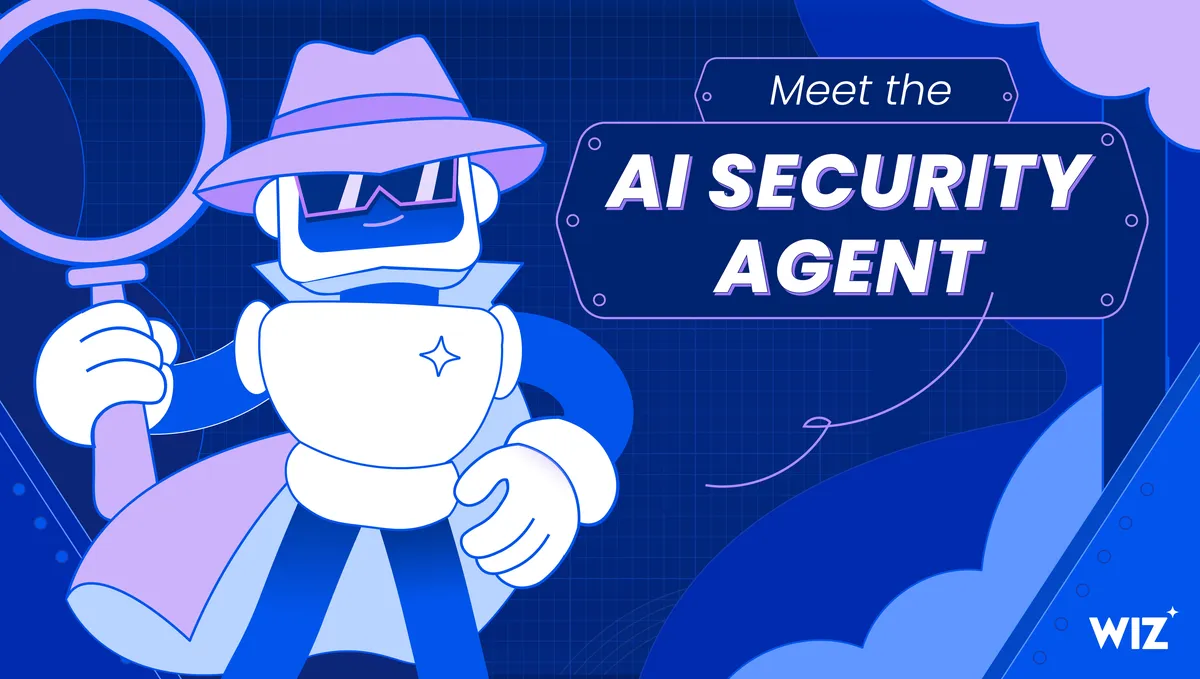
Wiz has introduced the Wiz AI Security Agent in Public Preview, a tool designed to connect AI application analysis with cloud security context. The company says it can discover AI agents, assess their intended purpose and capabilities, and identify attack paths that span application code and cloud infrastructure.
- Wiz AI Security Agent is now available in Public Preview.
- It analyzes AI applications across self-hosted environments, supported PaaS platforms and code repositories.
- Wiz says it has detected up to five times as many AI agents as traditional discovery engines.
- The tool connects application findings with identities, permissions, exposure and sensitive data access.
- It compares an agent’s intended purpose with its actual capabilities and access.
Connecting AI applications to cloud risk
Wiz says AI agents operate at the application layer, where they orchestrate prompts, call tools and execute business logic. Cloud security provides a different view, covering identities, workloads, permissions, vulnerabilities and data. According to Wiz, assessing AI security requires visibility into both layers and an understanding of how they interact.
In the company’s example, a hypothetical BigQuery Agent has tools with read and write access to multiple BigQuery databases, as well as an arbitrary code execution vulnerability. Wiz says that combining these findings could show how an external attacker might hijack the agent’s tools and access sensitive data.
The agent feeds application findings into the Wiz Security Graph. It can then evaluate factors including external exposure, internet egress capabilities and effective BigQuery permissions to reconstruct an end-to-end attack path.
Discovering agents across development and production
Wiz says custom agents can be difficult to find because they may be defined entirely in code, without a management API or recognizable signature. The Wiz AI Security Agent is designed to inventory custom AI applications, models, system prompts, MCP servers and tool definitions across code repositories, supported PaaS platforms and self-hosted environments.
Its coverage includes AI agents and applications running on VMs, containers and serverless infrastructure, code stored in buckets, custom agents defined on supported PaaS platforms, and AI application code, prompts and configurations in development repositories.
Across customer environments, Wiz says the AI Security Agent has detected up to five times as many AI agents as traditional discovery engines. The company says the resulting application intelligence is brought into the Wiz Security Graph, linking each AI application to its surrounding environment.
Assessing purpose, capabilities and exploitability
The tool analyzes application implementation, logic, instructions and permissions to reconstruct an agent’s architecture. It compares an agent’s intended purpose with its effective capabilities, highlighting issues such as external exposure, unnecessary tools, excessive permissions and access to sensitive data beyond the agent’s scope.
For example, an assistant intended to answer questions using internal business data might also be able to execute code, modify local files or communicate with external systems. Wiz says the agent provides supporting evidence, including source code references, so security teams can review how capabilities were identified.
The agent also uses AI-powered reasoning to examine risks that may arise from the interaction between instructions, tools, capabilities and access. Wiz gives the example of an unauthenticated endpoint accepting attacker-controlled system instructions. If the connected agent can execute arbitrary shell commands, the company says that weakness could create a direct path to remote code execution.
For security teams, the product’s significance lies in combining this application-level analysis with cloud context. Wiz says that approach can help organizations build an AI inventory, identify concrete attack paths and apply least privilege according to each agent’s intended purpose. The company says additional specialized risk domains, including code-to-cloud analysis and AI SAST, will follow.
Wiz: Introducing the Wiz AI Security Agent