Anaconda: Two LiteLLM Supply Chain Attacks Never Reached Its Curated Channel

Anaconda says neither of the two compromised LiteLLM releases made it into its curated Python package channels, crediting a build delay and source-based builds. The company laid out the argument in a blog post on the LiteLLM supply chain attacks of March and October 2026.
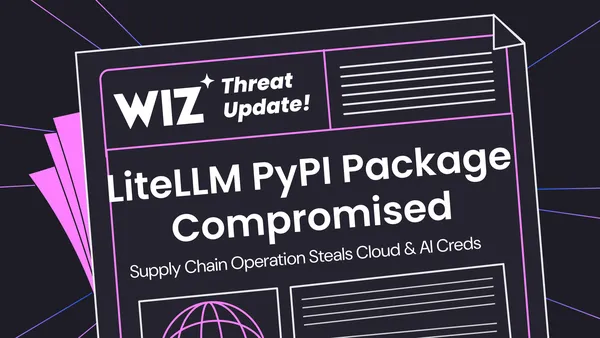
- LiteLLM was hit by supply chain attacks in March and October 2026, the first via malicious PyPI versions with a credential stealer.
- CloudSEK reported in August that the March attack exposed more than 2,500 organizations and about 434,000 CI/CD pipelines.
- The October attack used an unrevoked administrative key committed to a public repository in May.
- Anaconda says it never built the compromised versions 1.82.7, 1.82.8 and 1.107.0, citing a build delay and source builds.
- Anaconda concedes no single control catches everything and also scans packages for malware.
Two attacks on a widely used library
The first incident came in March 2026. According to LiteLLM, initial evidence suggests the attacker got malicious versions onto PyPI by "bypass[ing] official CI/CD workflows" within its normal release flow. LiteLLM said the malicious versions carried a credential stealer designed to harvest environment variables, SSH keys, cloud credentials, Kubernetes tokens and database passwords.
Anaconda notes that LiteLLM has millions of monthly downloads from PyPI and billions in total. After the incident, LiteLLM revamped its CI/CD security with additional security scans and new Docker image protocols. In August, CloudSEK reported that the March attack had exposed more than 2,500 organizations and about 434,000 CI/CD pipelines. Anaconda says daily PyPI downloads dropped sharply after that news and have stayed lower since. It suggests that many security teams may have stopped letting pipelines pull new releases straight from PyPI.
In October, LiteLLM was compromised a second time, through a different path. An administrative key committed to a public repository in May had never been revoked. The attacker used it to extract a GitHub organization owner's token, then pulled two more maintainer tokens from CI secrets. Branch protection rejected the attacker's change to the release workflow, but the owner's token could override it. That same week, LiteLLM had relaxed its release approval, so any two engineers could trigger and approve a release. In Anaconda's words, one over-privileged credential that was never rotated was enough to get around the controls.
How Anaconda says it kept the releases out
Anaconda argues that the safeguard has to sit between upstream releases and an organization's pipelines. Pinning versions and mirroring known-good releases work, it says, but only for packages already identified and they must be maintained by hand. A typical enterprise environment depends on hundreds of packages.
The company points to two defenses. The first is a build delay, described in its documentation as "a time delay between source availability and build initiation, providing a window to detect upstream compromises before packages enter the build pipeline." Anaconda says both malicious versions were live on PyPI for only hours, and the October release for about two hours. It sets the delay per package.
The second is building most packages from source in its own controlled infrastructure rather than redistributing prebuilt ones. Anaconda says independent analyses found the October malware only in LiteLLM's prebuilt wheels, not in the source code. It adds that building from source will not catch tampering in the source itself, which is why the delay comes first.
Anaconda points to its version history as evidence. Its channel went from 1.82.4, built March 22, to 1.83.7, built April 30, skipping the compromised 1.82.7 and 1.82.8. For October, it went from 1.104.0 on October 6 to 1.108.0 on November 6, skipping the compromised 1.107.0, which it never built.
Access controls and their limits
Anaconda says only authorized staff can reach its build and release systems, with multi-factor authentication and role-based limits. Package recipe changes need a teammate's review before merging. Build and release use separate credentials, and only designated members of the package building team can publish. It also verifies source code against recorded SHA-256 checksums and pins versions in recipes, so a changed source file stops the build. The company says its CEO has no access to these systems.
Anaconda acknowledges that no single control catches everything. A build delay works best against compromises found quickly, as both LiteLLM attacks were. For longer-hidden malicious code, it says it scans packages for malware before distribution and can pull a package through a formal removal process.
What it means for enterprise teams
The post is a vendor pitch for Anaconda's AI Artifacts and its curated package channels, which it says cover more than 20,000 Python packages, and the claims about its own processes come from Anaconda. Its core point is that a malicious release caught and pulled within hours should not reach the packages a pipeline installs. Anaconda says these practices apply across its whole channel, not just LiteLLM, so developers can keep using the Python ecosystem without each upstream release becoming a security incident. It directs interested organizations to its sales team.
Anaconda: Two LiteLLM Attacks and the Checkpoint Your Pipelines Need