Harvey Expands Review Tables With Templates, Vaults and Document Sync
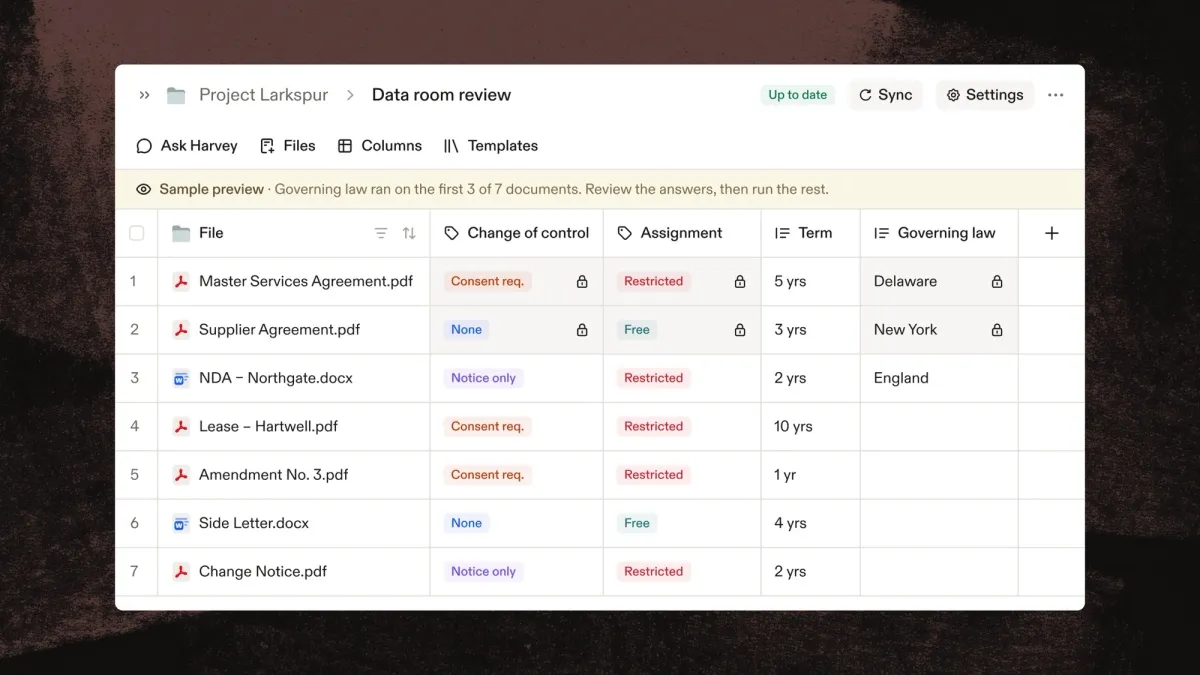
Harvey is expanding Review Tables with tools for faster setup, prompt testing across sample documents and ongoing updates as new documents arrive. The company says the changes are designed to help legal teams keep large document reviews current without rechecking verified answers.
- Agents can create Review Tables from firm templates.
- Teams can combine multiple Vaults in one review table.
- Prompts can be tested on ten documents before a full run.
- Sync adds new documents while preserving verified or locked answers.
- Sync is available now, while the other features are in early access.
Faster table creation and testing
Within a Space, an agent can now use a firm’s templates to create Review Tables with questions that a team already relies on. Harvey also says agents can create several tables at once when a matter requires multiple reviews.
Teams can combine multiple Vaults in a single table, allowing them to bring data from more than one source into one review. Before running a prompt across all documents, users can test it on ten documents and refine the prompt based on that sample.
Review Tables are designed to help teams ask the same questions across large collections of documents, with each answer linked to its supporting passage. The new workflow is intended to reduce setup work while giving teams a way to adjust questions before processing a full document set.
Sync adds documents while protecting verified answers
Harvey’s update also focuses on reviews that change over time. Users can connect a table to the Vault or folders containing its documents. When new documents arrive, Harvey flags the table as out-of-date.
Clicking Sync adds the new documents to the table. According to Harvey, the system processes only rows for those new documents, while answers that a team has verified or locked remain unchanged. Users can hover over the sync button to see when the table was last synced.
This lets a colleague, partner or agent continue from the same verified table rather than reanalyzing the documents from scratch. Harvey gives examples including diligence findings as a data room expands, litigation chronologies as productions arrive and in-house trackers that check new agreements against the same terms.
More analysis options are planned
Harvey says it plans to add tables that organize rows around how a team tracks work, rather than using one row per document. Planned examples include organizing work by entity, deal or source, and tracking claims, counterparties or lease properties.
The company says this future capability will retain the collaborative document review interface used by Review Tables. Users interested in access can join the waitlist.
Sync is available now in Harvey, while the other features described in the announcement are in early access. Harvey directs customers to their Harvey team for access and to its roadmap for current status. The changes make Review Tables more suitable for recurring legal reviews where documents and findings continue to develop.
Harvey: Build Review Tables Faster and Keep Them Current