Kilo Desktop brings 500+ AI models and coding agents into one app
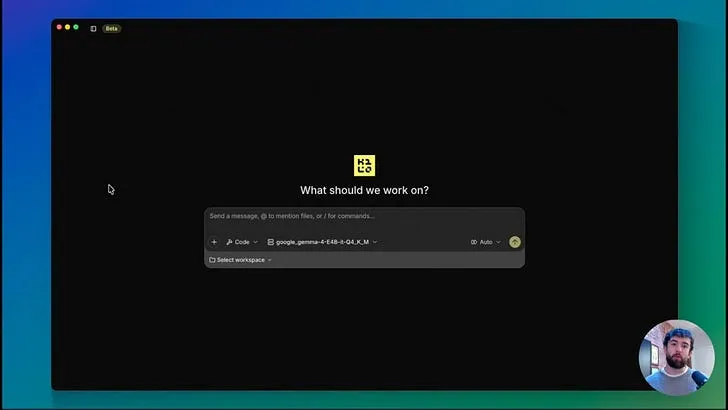
Kilo has released Kilo Desktop, an app that combines access to more than 500 AI models, agentic coding and data science workflows, and local model management in one place. According to Kilo, it is available to download today.
- Kilo Desktop is a new app with native access to more than 500 AI models, available to download today.
- It includes four agents, Code, Plan, Ask and Debug, plus support for custom agents.
- Agents can edit notebooks directly, and the app manages conda environments using Anaconda's catalog of more than 19,000 vetted packages.
- Auto Efficient routes requests to the cheapest model proven capable, based on Kilo Bench.
- A local model server and admin controls for models, providers, geographies and agent permissions are built in.
One app instead of stitched-together tools
Kilo says the idea behind Kilo Desktop is to remove the tool juggling that comes before real building starts. In its announcement, the company argues that frontier labs such as OpenAI, Anthropic and Google build remarkable models, but their agents tie users to their own model families. Trying an open-source model from NVIDIA, Moonshot, MiniMax or Z AI means changing a setup, and running a local model adds another tool to manage.
Kilo Desktop is meant to cover that whole path. According to Kilo, users get native access to more than 500 AI models, agentic coding and data science workflows that plan before they build, and built-in management of local models and conda environments. The company describes the flow as going from an idea to a plan, to working code, to testing the result, all in the same place.
Workspaces, agent modes and notebooks
Kilo points out that real projects rarely live in one folder, and that most coding agents can only see one of them. A Kilo Desktop workspace is a named group of folders from the user's machine, so an agent can read across a frontend, an API and an analysis without files being copied between them.
The app ships with four agents:
- Code writes and edits files.
- Plan reads the project and returns a step-by-step implementation plan without changing anything.
- Ask answers questions about code without modifying it.
- Debug finds what broke and fixes it.
When a plan is approved, Code takes over, splits the plan into subtasks and runs them in parallel with sub-agents. Users can also build custom agents and share them with their team.
For data work, Kilo says the agent edits notebooks directly rather than requiring users to paste cells into a chat. Users can watch its cursor move through the cell as it writes and review the work in the notebook with the data loaded. The app also creates and manages conda environments internally, drawing on Anaconda's catalog of more than 19,000 vetted packages, so dependencies are in place before the first prompt.
Chats, notebooks, files, diffs and terminals open as tabs that can be arranged into groups. A carousel mode lets users set each panel's width and scroll across wide layouts, and any tab can go full screen or pop out onto a second monitor.
Model choice, routing and local models
Kilo says every major frontier lab, the leading open-source models and providers from every geography are available in one picker. Users who would rather not choose can rely on Kilo's auto routers. Auto Efficient checks a request against Kilo Bench, the company's own coding benchmark, and sends it to the cheapest model that has proven capable of that kind of task. Kilo says this lets users keep experimenting without using their most expensive model for every edit.
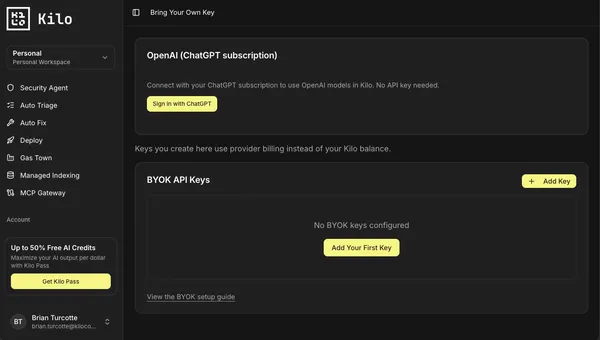
People who already have a model subscription, an API key or a self-hosted model can connect them through a preset or a custom endpoint with their own API key. For work that should stay private, Kilo Desktop includes a local model server that runs open models on the user's own hardware, where prompts stay. One setting decides whether local requests carry Kilo's full agent toolkit for code work or run without it for lighter, faster interactions.
The Kilo marketplace offers skills, Model Context Protocol (MCP) servers and custom agents, which can be installed for one workspace or for all of them.
What it means for teams and users
For teams, Kilo says administrators can control which models people may use, which providers and geographies are allowed, what each agent is permitted to do, and which skills it can install. These controls live in the product, so everyone builds within limits the team sets.
For individual developers and data scientists, the pitch is a single environment that does not lock them into one vendor's models. The source does not give pricing details, so cost for Kilo Desktop itself is not covered here. Kilo says the app can be downloaded now.
Kilo Code: Introducing Kilo Desktop