Lambda reports faster AI training with NVIDIA Blackwell Ultra GPUs
Lambda reports a 2.86× improvement in mixture of experts language model training and a 1.50× improvement in image model training in the latest MLPerf round. The results were achieved on 64 NVIDIA Blackwell Ultra GPUs in a single NVIDIA GB300 NVL72 system.
- GPT-OSS-20B training finished in 19.697 minutes on 64 NVIDIA Blackwell Ultra GPUs.
- Lambda reports a 2.86× improvement over the previous 64 NVIDIA H100 result.
- Flux.1 training finished in 26.36 minutes in an unofficial reproduction.
- Lambda attributes much of the Flux.1 improvement to software and configuration changes.
- The company recommends validating benchmark results against each team's workload and costs.
GPT-OSS-20B training finished in 19.697 minutes
Lambda completed training for GPT-OSS-20B, a mixture of experts model, in 19.697 minutes. The run used 64 NVIDIA Blackwell Ultra GPUs in an NVIDIA GB300 NVL72 system and is listed as an official MLPerf Training v6.1 result.
According to Lambda, the result was 2.86× faster than the same workload on 64 NVIDIA H100 GPUs in the previous round, where Cisco recorded the result. It was also 1.37× faster than a result using 64 NVIDIA Blackwell GPUs across 8 NVIDIA HGX B200 systems, submitted by CoreWeave.
Lambda describes the benchmark as a useful reference for teams developing reasoning and agentic applications based on mixture of experts architectures. These models activate only a subset of their parameters for each token, which can reduce the time used in the forward pass and lower training and inference costs, according to the company.
Software improvements boost Flux.1 training
Lambda also trained the text to image model Flux.1 in 26.36 minutes on the same 64 NVIDIA Blackwell Ultra GPU configuration. The result was a 1.50× speedup over the fastest result on the same hardware in the previous round, although Lambda identifies it as an unofficial reproduction produced after the MLPerf submission deadline.
The company attributes much of the improvement to its software stack. A first reproduction using CUDA Version 13.4.1, CUDA Driver 580.174.04, and PyTorch NVIDIA Release 26.08 produced a 1.27× speedup. A second reproduction with an optimized configuration, including a learning rate of 0.00025, a global batch size of 1024, and 1600 warmup steps, added another 1.18× speedup.
Lambda says this was its first multimodal workload through the MLPerf harness. The company also reports that its unofficial Flux.1 result was 1.12× faster than AMD's official result using 64 Instinct MI355X GPUs. Lambda says the code and configuration are publicly available.
What the MLPerf results measure
MLPerf Training measures how long a system takes to train a model to a predefined quality target. Results are peer reviewed before public release. Lambda says more than 100 vendors have contributed during MLPerf's almost nine year history, with 25 participating in the latest training round, MLPerf Training v6.1.
The results point to two different ways of reducing training time. The GPT-OSS-20B result compares newer NVIDIA hardware with NVIDIA H100 GPUs, while the Flux.1 reproductions show how software and workload configuration can affect performance on the same hardware.
Shorter training runs can allow teams to complete experiments sooner, bring models to market faster, and use fewer billed GPU hours to reach a target, according to Lambda. The company also cautions that faster hardware does not automatically mean a lower bill, since teams must consider hardware pricing and the total capacity they reserve.
Lambda urges teams to validate benchmarks on their workloads
Lambda recommends comparing the benchmark model, quality target, and GPU count with a team's own workload before making a capacity decision. It also advises teams to identify whether an improvement comes from hardware, software, or training configuration, and to confirm that the tested setup is available to them.
The company says teams should request code, configurations, and run instructions, while distinguishing reviewed results from unofficial reproductions. It recommends a small evaluation with clear success criteria before a larger commitment.
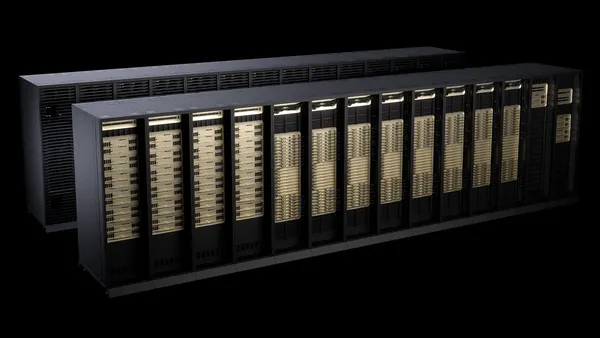
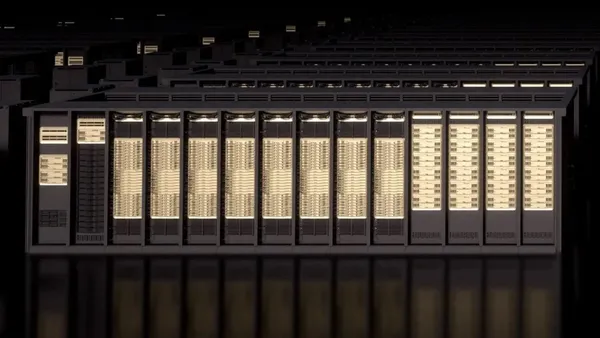
Lambda offers 1 Click Clusters for multi GPU training and Superclusters for larger dedicated deployments. The official GPT-OSS-20B submission used 16 nodes, 64 NVIDIA Blackwell Ultra GPUs in a single NVIDIA GB300 NVL72 system, and PyTorch NVIDIA Release 26.08. Lambda says all results remain subject to final MLCommons review and publication.