Meshy.ai benchmark finds fewer print failures with Make Printable
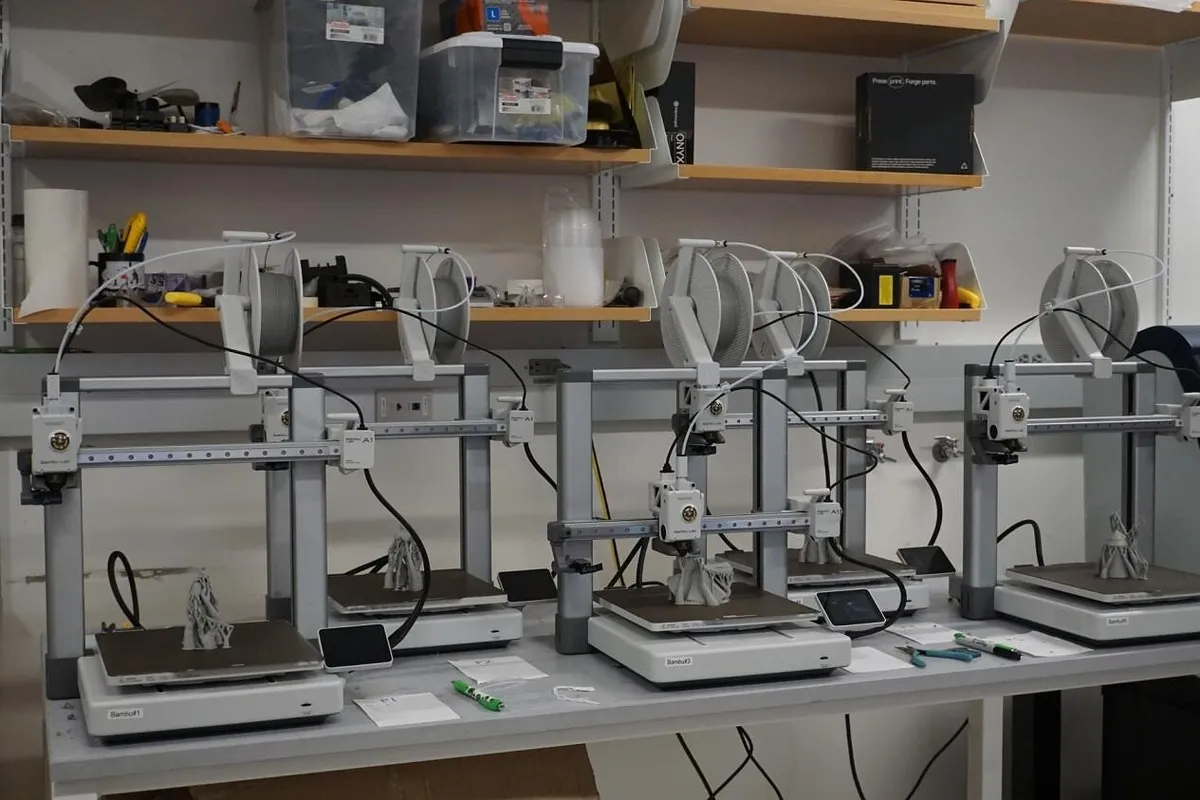
Meshy.ai says its Make Printable feature reduced the share of AI-generated 3D prints with major missing features or holes from 44% to 8% in an FDM benchmark. The study was conducted with the Advanced Digital Design and Fabrication facility at the University of Massachusetts Amherst.
- Make Printable reduced major missing features or holes from 44% to 8% in the test.
- The benchmark printed 125 parts from 25 challenging prompts.
- Meshy 7 with Make Printable produced 92% of prints without those major defects.
- A separate 100-prompt geometry check rose from 33.4% to 98.8%.
- The physical benchmark tested FDM printing only.
Benchmark tested 125 physical parts
Meshy.ai generated models for 25 prompts selected to challenge AI systems with delicate features such as thin wings, fins and panels. The Advanced Digital Design and Fabrication facility, known as ADDFab, prepared, sliced and printed 125 parts using brand-new Bambu Lab A1 printers.
The test compared five workflows: Meshy 7, Meshy 7 with Make Printable, and three other AI 3D generators. Every part was printed with the same settings and filament on matched printers. Engine identities were concealed during file preparation, printing and grading, while lab staff removed supports before assessing the results.
Three experienced 3D printing users scored each part using ADDFab's five-criterion rubric, and 17 volunteers ranked anonymous prints. Meshy.ai commissioned and funded the study and supplied six Bambu Lab A1 printers and consumables. ADDFab said its participation does not constitute endorsement of Meshy.ai products or an audit of the company's software.
Make Printable improved results in the physical test
According to Meshy.ai, 11 of 25 prints made with Meshy 7 alone, or 44%, had major missing features or holes. With Make Printable, that number fell to two of 25, or 8%. The company said 23 of 25 prints, or 92%, made with Meshy 7 and Make Printable had no major missing features or holes.
That compared with 21 of 25 prints, or 84%, for one other AI 3D generator, 15 of 25, or 60%, for another, and 14 of 25, or 56%, for the third. Meshy.ai said other defects may still remain. Two Make Printable examples, a six-legged insect and a long-finned tropical fish, still had major missing features or holes.
Dave Follette, ADDFab's director, said the study aimed to assess whether AI systems could produce parts that were both visually convincing and manufacturable. “The next consideration is design for additive manufacturing, which cannot be reliably assessed from a rendered image alone,” Follette said.
Geometry check showed a separate improvement
Meshy.ai also assessed model geometry across 100 prompts. It reported that models with complete, connected surfaces increased from 33.4% for raw Meshy 7 output to 98.8% after Make Printable, averaged across those prompts.
The company describes Make Printable as a print-preparation feature that repairs mesh defects and reinforces thin features for a selected size and process. It can be used with models generated in Meshy.ai or with uploaded models made in another tool. The company said the surface assessment measures detected openings and invalid connections, not physical print success.
Make Printable is currently available as part of Print Check in Meshy.ai. The feature can prepare geometry for FDM, SLA and Full-Color presets, although the benchmark's physical testing covered FDM only. Meshy.ai said material, orientation, support strategy, printer calibration and settings still affect whether a print succeeds. The company also offers a Repair Printability API for external model files and supported Meshy.ai task outputs.
The study's prompts were deliberately chosen to stress delicate features, with priority given to cases where competing models were predicted to be too thin to print. Meshy.ai said the results should therefore not be interpreted as representative of performance across all prompts. The company said future testing could extend to SLA, SLS and Full-Color printing.