NVIDIA unveils Rubin HPC GPU for agent-driven scientific computing
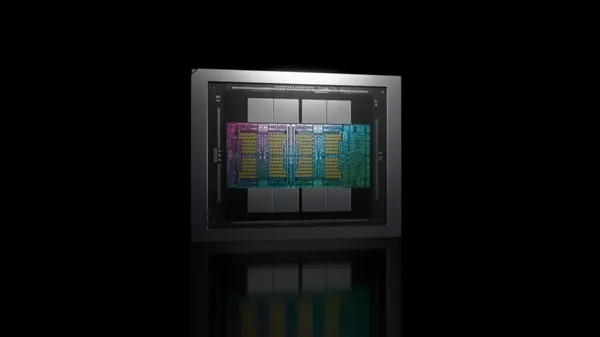
NVIDIA has announced Rubin HPC, a new GPU in its Vera Rubin platform designed to accelerate simulations and data processing for science, engineering and analytics workflows. The company says the GPU will help agents test more scientific and engineering ideas and shorten the path to discovery.
- Rubin HPC is a new GPU in the NVIDIA Vera Rubin platform.
- It has more than 50,000 CUDA cores on a single GPU.
- The GPU includes sparse data acceleration and seventh-generation NVIDIA NVLink.
- NVIDIA targets science, engineering and analytics simulations.
- Rubin HPC is expected to be available in 2028.
Built for simulation-heavy workloads
Announced at SC26, Rubin HPC targets workloads in which scientists and engineers use simulations to understand complex systems before proceeding to experiments or physical prototypes. As agents help teams explore more candidate materials, molecules and designs, the demand for GPU-accelerated simulations increases.
NVIDIA says Rubin HPC will accelerate these simulations, allowing agents to test ideas and guide their next steps. “For agents tackling science and engineering, faster simulation means faster discovery,” said Ian Buck, vice president of hyperscale and high-performance computing at NVIDIA.
More than 50,000 CUDA cores
The Rubin HPC GPU features more than 50,000 CUDA cores on a single GPU, which NVIDIA describes as a record number. It also includes sparse data acceleration, a capability intended to keep the cores supplied with data, and seventh-generation NVIDIA NVLink interconnect technology for faster GPU-to-GPU connectivity.
NVIDIA says the design scales data movement and compute together instead of increasing compute alone. This balance is intended to keep the GPU working on calculations rather than waiting for data, an important consideration for scientific computing workloads.
From hypothesis to refinement
NVIDIA identifies recurring computational patterns across climate models, engineering simulations, genomic analysis and financial risk. These workloads can involve retrieving a small number of scattered values from a large dataset, calculating a result and repeating the operation at scale.
Rubin HPC is designed to accelerate patterns including sparse matrix operations, stencil computations, sorting and reductions. NVIDIA CUDA-X libraries provide optimized implementations of complex algorithms, including algorithms relevant to simulation and analytics. Used with Rubin HPC, the libraries are intended to help agents reach reasoning outcomes more quickly.
Expected availability in 2028
NVIDIA says faster agent-invoked simulations can reduce the time between a hypothesis, simulation and refinement. That could let researchers and engineers choose their next steps sooner and direct laboratory work toward the most promising candidates, according to the company.
Rubin HPC is expected to be available in 2028. The announcement positions the GPU as infrastructure for science, engineering and analytics teams that use agents alongside simulation, rather than as a general-purpose product announcement.