NVIDIA Expands CUDA-X Libraries for Faster Scientific Discovery
NVIDIA has expanded its CUDA-X library portfolio with cuPhoton, cuPotential and cuSpa, giving researchers tools to process large datasets and model complex systems across science. The company says the libraries also provide AI agents with capabilities that can help scientists analyze results and accelerate discovery.
- NVIDIA expanded CUDA-X with cuPhoton, cuPotential and cuSpa.
- cuPhoton reduced one Event Horizon Telescope analysis from over a month to eight minutes, according to NVIDIA.
- cuPotential accelerates molecular simulation software by up to 3x.
- cuSpa delivered a 900x speedup for cell polygon calculations compared with CPUs.
- NVIDIA says Basecamp Research achieved searches up to 84x faster with its GPU-accelerated HMMER library.
From black hole imaging to fusion research
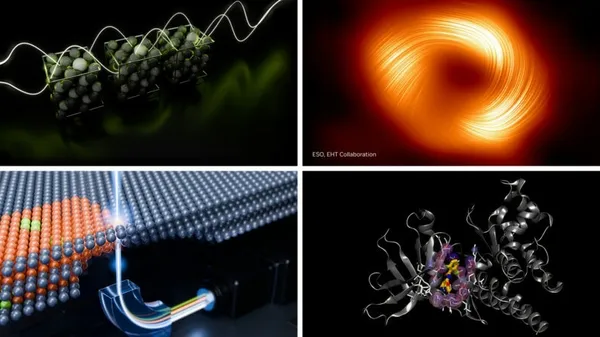
NVIDIA says its cuPhoton Toolkit can substantially reduce the time required to process observations from the Event Horizon Telescope, which links radio dishes around the world and generates petabytes of data. With the cuPhoton.xBeam module, analysis that once took over a month now takes eight minutes, according to NVIDIA.
The company says cuPhoton was used to correlate observations of the black hole jets J1924 and 3C279. The full workflow, including data loading, processing and visualization, runs on distributed multi-GPU systems or an NVIDIA DGX Spark system. NVIDIA says this supports work to reconstruct the Messier 87* black hole galaxy in real time and study how gas moves under a black hole’s gravitational pull.
Pacific Fusion researchers used the cuPhoton.xLens module to extract information while plasma simulations were running. NVIDIA says the workflow can be coupled with a locally running, NVIDIA Nemotron-powered agent, allowing interactive analysis that can help steer simulations in real time for fusion reactor target and chamber design.
Libraries target drug and materials research
NVIDIA cuPotential is designed to accelerate molecular simulations used to evaluate drug candidates before laboratory experiments. Built on work by researchers at the Simons Foundation’s Flatiron Institute and D. E. Shaw Research, it accelerates existing simulation software by up to 3x while improving calculation stability and accuracy, according to NVIDIA.
The company says cuPotential can speed synthetic data creation for generative AI models, help identify previously unknown molecular binding sites and calculate the strength of molecular interactions. NVIDIA is working with Schrödinger and communities around AMBER, NAMD, GROMACS, LAMMPS and the Open Molecular Software Foundation. Cadence, Fathom Therapeutics, Topos Bio, Genesis Molecular AI and Terray Therapeutics are adopting the technology for drug discovery.
Daviator, a collection of batched GPU kernels for the Vienna Ab initio Simulation Package, is coming to NVIDIA ALCHEMI. NVIDIA says it can deliver quantum mechanical calculations up to 22x faster and at up to 75% lower cost. At Lawrence Berkeley National Laboratory, the NVIDIA DAQIRI networking library connects an electron microscopy detector directly to GPU processing, allowing analysis during experiments.
Scaling single-cell and biological analysis
The newly open source cuSpa accelerates cell polygon calculations for large spatial graphs used in patient and cancer models. NVIDIA says researchers at Memorial Sloan Kettering Cancer Center achieved a 900x speedup compared with CPUs.
The rapids-singlecell framework, codeveloped with scverse, accelerates single-cell analysis and is available in an agent-ready container. Therna Biosciences processed data 200x faster for therapeutic design using the tool, according to NVIDIA. 10x Genomics has integrated rapids-singlecell into its Sentira platform for academic researchers, biopharma teams and foundation model builders.
NVIDIA also says its open source, GPU-accelerated HMMER library supports annotation of predicted protein sequences. At Basecamp Research, benchmark searches ran up to 84x faster than standard HMMER, reducing the time needed to annotate biological datasets used to train therapeutic design models. Together, the examples show how NVIDIA is positioning CUDA-X as infrastructure for research workflows where faster processing can move analysis closer to the experiment and support agent-assisted scientific work.